
Last updated November 23, 2026
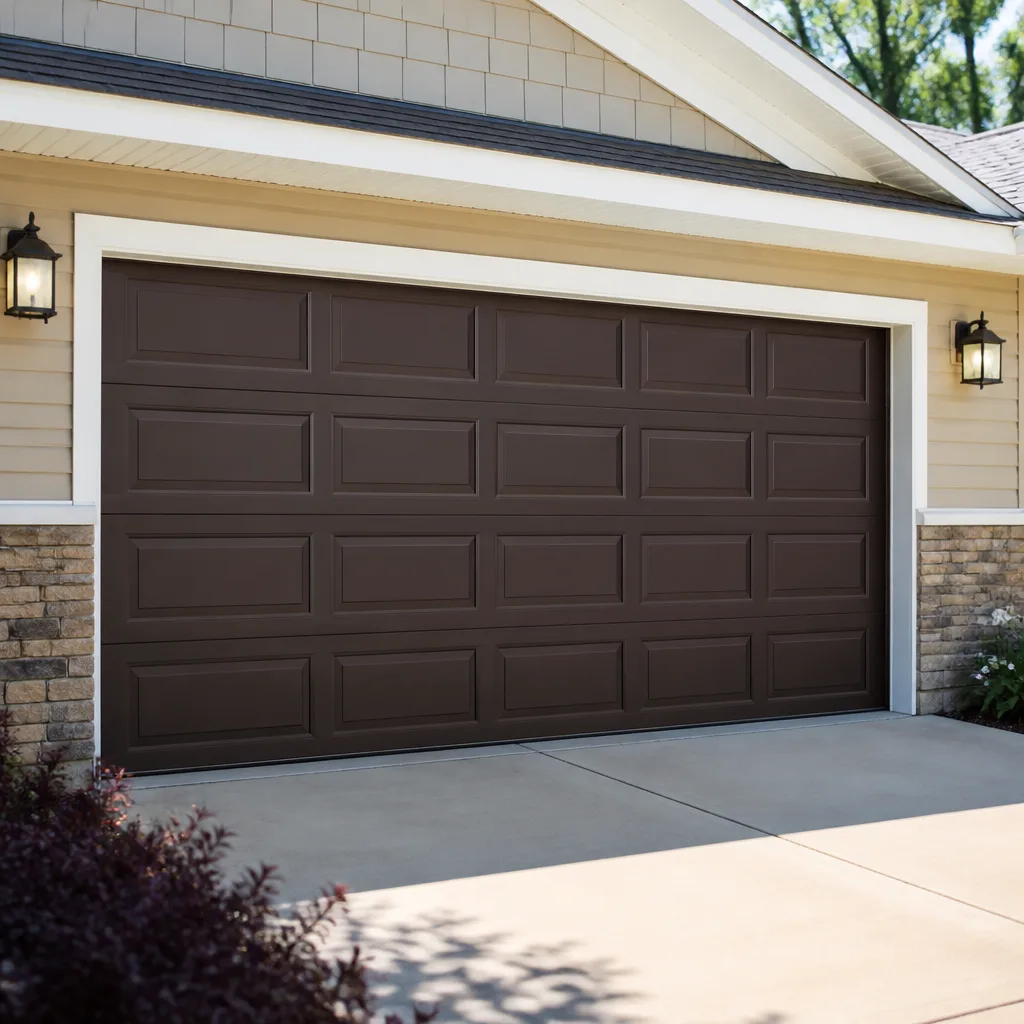 Raised-panel steel
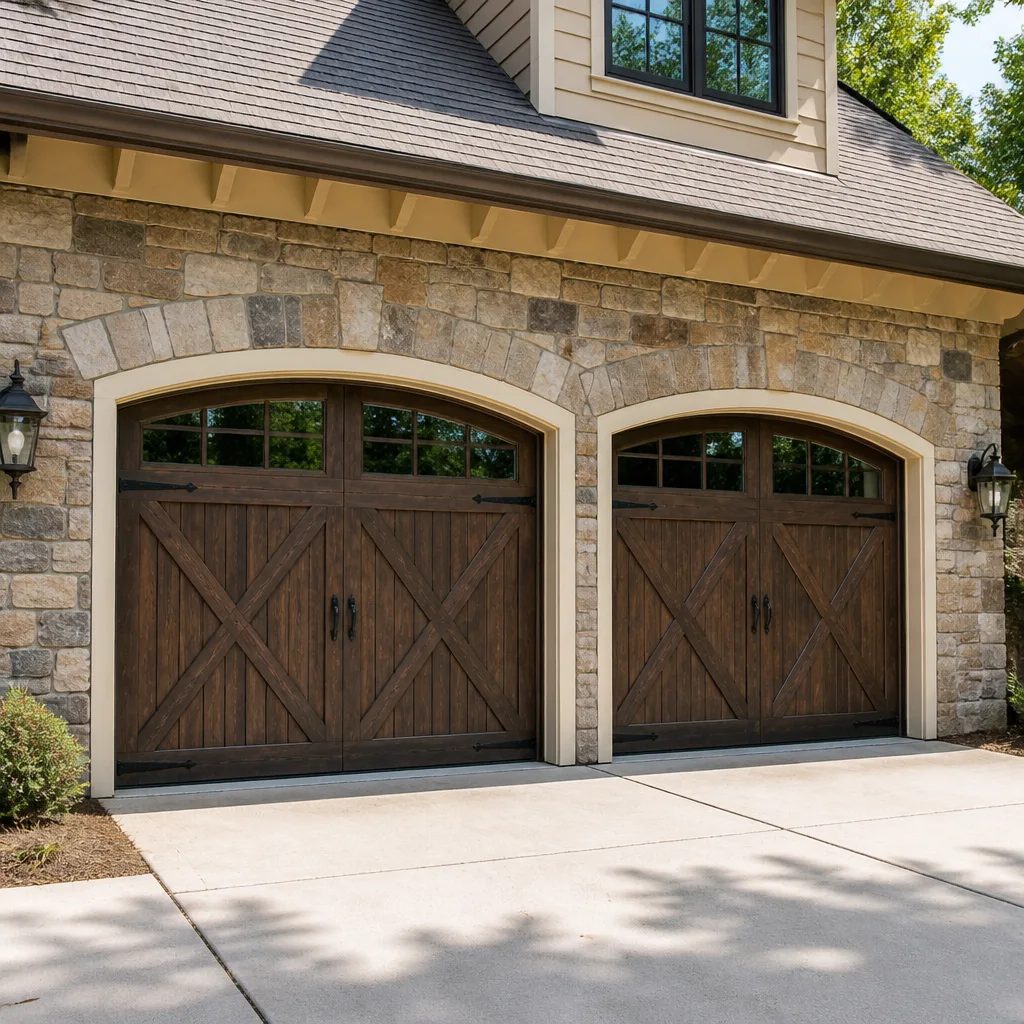 Carriage house
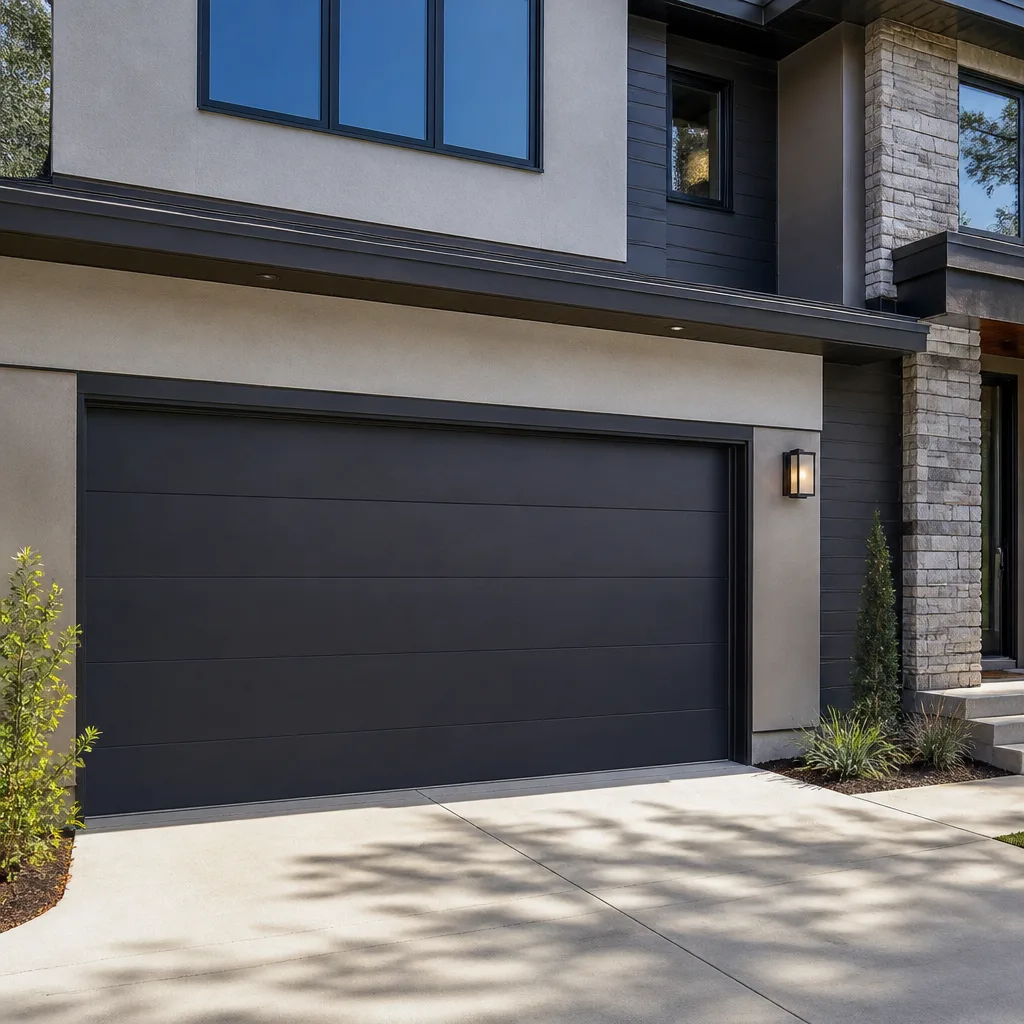 Modern flush
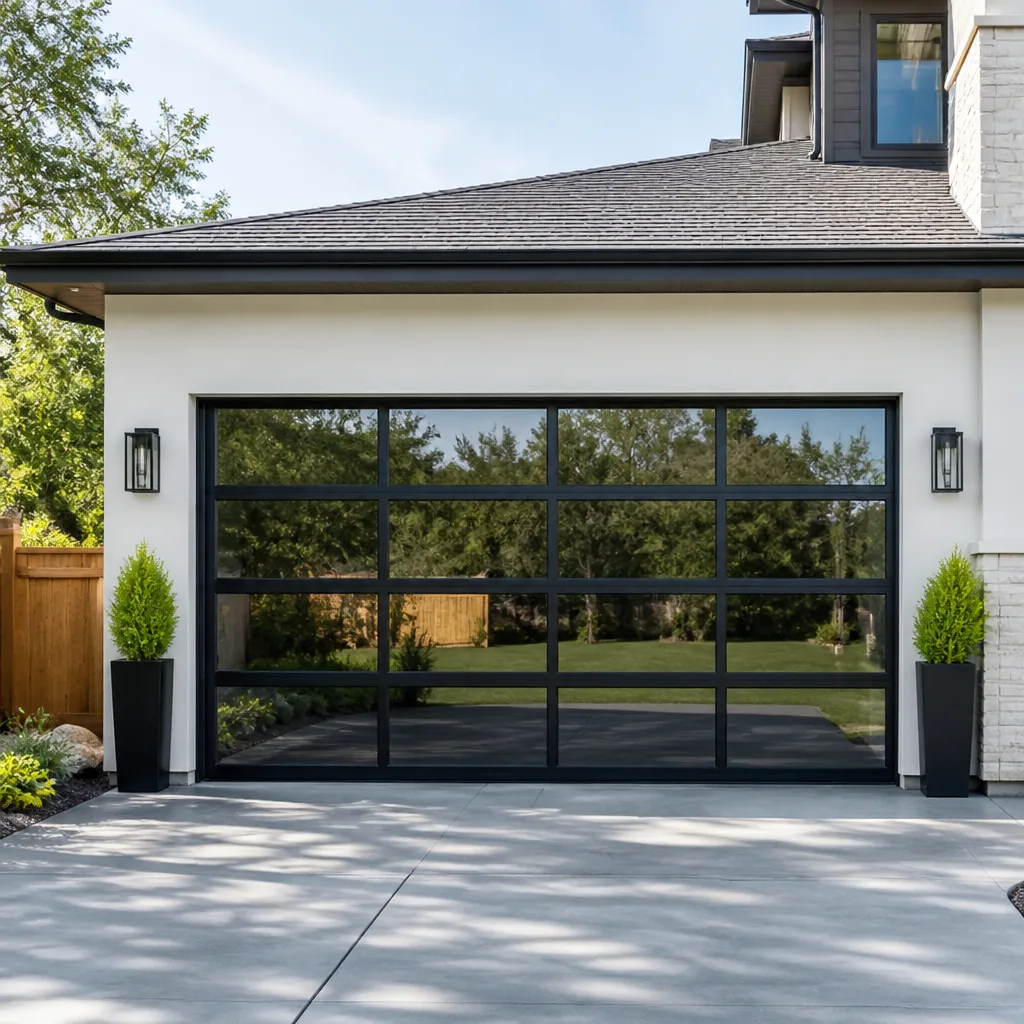 Full-view glass
 LiftMaster openers
 Chamberlain openers
Full 25-point door and opener safety check with every visit - springs, cables, rollers, tracks, and your LiftMaster or Chamberlain opener included
You get a price before we start. It does not change when the pro arrives.
Get your free estimateGarage Door Permits, Codes & Inspections in West Babylon, NY: What You Need to Know
Most homeowners assume that swapping a garage door is as permit-free as replacing a mailbox. It usually isn’t that simple. In West Babylon and across the Town of Babylon, whether you need municipal approval depends less on the fact that a new door went up and more on what had to change to make it fit. Cut a wider opening, add a structural header, or put an electric operator into a garage that never had one, and you’ve crossed a line that a title search or a buyer’s inspector may eventually care about. This guide maps those thresholds plainly, so you know where your project stands before you sign anything, not after a closing table surprise.
Quick Answer
A like-for-like garage door replacement in an existing, correctly sized rough opening typically does not require a Town of Babylon building permit. You do need approvals when the work creates a new opening, alters a structural header, or adds an electric operator to a garage that was previously manual. When in doubt, call the Town of Babylon building department directly and describe exactly what will change.
Styles & brands we work with
- Raised-panel steel
- Carriage house
- Modern flush
- Full-view glass
- LiftMaster openers
- Chamberlain openers
Table of Contents
- How NYS Energy Code Affects Garage Door Insulation
- When You Actually Need a Permit in West Babylon
- When a Like-for-Like Swap Skips the Permit
- Do Openers and Electrical Work Count as a Permit Job?
- What Unpermitted Work Costs You at Sale
- Fixing a Previous Owner’s Unpermitted Door
- What an Inspection Actually Checks
- Why West Babylon Conditions Matter
How NYS Energy Code Affects Garage Door Insulation
New York State’s energy code treats the garage door as part of the building envelope whenever the garage sits inside the home’s thermal boundary. Practically speaking, that applies when there’s conditioned living space above or beside the garage. In those cases, an insulated door isn’t a luxury upgrade, it’s part of what inspectors look for on new installations or significant alterations. The code references a minimum R-value for the door assembly, and the exact number depends on the project scope and code cycle in force when the work is permitted. We always tell West Babylon homeowners to confirm the required threshold with the building department for their specific project, since this number has shifted between code cycles and the details vary by assembly.
What this means in the real world: if your garage is under a bedroom, an air handler sits above it, or the space is otherwise conditioned, plan for an insulated door with a documented R-value rather than a basic 24-gauge single-layer door. If the garage is a detached, unconditioned structure, the energy code requirement often doesn’t apply, though it’s still smart to ask when you pull the quote.
Quality insulated doors from brands like Clopay and Amarr publish R-values clearly on their spec sheets, which is exactly what an inspector wants to see. Bring the manufacturer’s documentation to the job. If you’re replacing a door on the same opening without touching the header or jamb, you likely don’t need the code review at all, but insulated doors still make sense in West Babylon’s cold winters and humid summers. Ask for the product data sheet up front so it’s available if anyone asks.
When You Actually Need a Permit in West Babylon
A garage door project requires Town of Babylon review when the work changes the building’s structure, opening, or electrical system, not simply its skin. That’s the clean line. If the project stays inside the existing rough opening and keeps the same door type, you’re almost always clear. If it changes the framing, the opening size, or introduces electrical wiring where none existed, expect to file.
Here’s how we describe the thresholds to West Babylon customers:
- New opening creation: Cutting a garage bay into a wall that wasn’t previously a garage opening requires a permit and structural review. This is genuine structural work.
- Structural header changes: Enlarging the opening, replacing the header beam, or modifying the load path above the door needs engineering and municipal approval.
- Electric operator into a previously manual garage: Adding a garage door opener where the door was previously operated by hand typically requires an electrical permit, since new wiring and a new circuit are involved. A straightforward replacement of an existing opener generally doesn’t.
- Door swap in the same rough opening: A like-for-like replacement usually skips the permit process entirely. See the next section for caveats.
- Repairs: Spring replacement, cable work, roller and track repair, and opener service never require a permit.
We’ve seen homeowners in West Babylon get tripped up by the opener question because they assume “it plugs into the wall, so it must be fine.” It is fine, in the sense that you can use it. But a new opener on a previously manual door is new electrical infrastructure, and the Town treats it as such. Ask before you book, not after.
If you’re weighing a repair versus a full replacement, our team can walk you through which category your project falls into. It’s one of the first questions we ask, right alongside the brand of door and opener you already have.
When a Like-for-Like Swap Skips the Permit
A garage door replacement in the same rough opening, at the same width and height, with the same or equivalent door type, generally doesn’t require a permit in West Babylon. This is the everyday case for most homeowners. A tired door in a correctly framed opening comes down, a new one goes up, and no municipal filing happens. It’s the cleanest, fastest path.
The word “like-for-like” does a lot of work in that sentence, though. Here are the caveats we always mention:
- Measure the opening, not the door. An old door that’s been trimmed or shimmed over the years may leave a rough opening that’s slightly off from the manufacturer’s standard. If the new door needs a bigger opening, that’s structural work and needs a permit.
- Watch the spring and track system. High-lift and low-headroom conversions can require new horizontal tracks and repositioned springs. These are mechanical changes, not structural, so they typically don’t trigger a permit, but they can affect how the door fits and operates.
- Confirm the electrical situation. If your old door was manual and the new one comes with an opener, the opener is new electrical work. The door itself may be permit-free; the operator isn’t.
- Check the sill and jamb. Replacing rotted sill plates or jambs at the same time is fine and doesn’t change the permit picture, but note it on the estimate so the scope is clear.
- Look at the wall above. If the header shows sag or damage, a like-for-like swap without structural review can hide a bigger issue. A technician should inspect the framing before the new door goes in.
For most West Babylon homeowners with a standard two-car or one-car garage, the swap is permit-free and straightforward. For everyone else, a five-minute call to the building department is cheaper than a surprise later. We build the scope so it’s clear which category you’re in before work starts. If you’re ready to talk through what your project actually involves, our Garage Door Repair West Babylon page is a good place to start.
Do Openers and Electrical Work Count as a Permit Job?
Yes, in the specific case of adding an electric operator to a garage that was previously manual. No, in the far more common case of replacing an existing opener with a new one. That’s the distinction that matters for permit questions around the opener.
Why the split? Permit requirements around electrical work exist to make sure new circuits are installed to code and inspected. A replacement opener uses existing wiring and a service point that was already signed off. A first-time opener introduces a new circuit and a new point of electrical connection, which is exactly the kind of work the Town of Babylon wants to review.
When we quote a new opener installation in West Babylon, we ask one question first: did this garage ever have an electric opener before? If the answer is no, we treat it as a permit-required project and plan accordingly. If the answer is yes and the existing wiring is in good shape, it’s a straight replacement across the same service point, and no permit is needed.
On the brand side, we work on the openers West Babylon homeowners actually have installed. LiftMaster, Chamberlain, Genie, and Craftsman cover the vast majority of residential systems, and each has its own quirks around safety sensors, travel limits, and remote pairing. If you’re replacing an older system, we can match a new unit to the door’s weight and spring setup so you’re not fighting the opener’s limits. Our garage door opener repair page goes deeper on the diagnostic side if your current operator is misbehaving rather than being replaced.
The safety side matters here too. A garage door opener that’s incorrectly installed or wired is a genuine hazard, both to the door and to anyone under it. Never splice new opener wiring yourself. A trained technician handles the electrical side safely, and in a permit-required case, works with the inspection process cleanly.
What Unpermitted Work Costs You at Sale
It doesn’t cost you a dollar figure at the moment of sale. It costs you leverage, time, and sometimes the transaction itself. Unpermitted garage work shows up most reliably in three places: a buyer’s home inspection report, a title search that reveals open permits, and a lender’s appraisal or underwriting review. Once any of those hits, the seller is the one answering questions.
The most common outcomes we see discussed when West Babylon homes change hands:
- Delayed closing: An open permit or unpermitted alteration has to be resolved before title transfers cleanly. That can mean a filing, an inspection, and a re-review, which typically adds weeks to the timeline.
- Renegotiated price: A buyer who finds unpermitted structural work has real negotiating room. The credit they ask for often exceeds what the original permitted work would have cost.
- Buyer walk-away: Less common but real. Some buyers simply don’t want to inherit a compliance mess, especially when structural work is involved.
- Lender conditions: If the appraisal or underwriting flags the work, the loan can be conditioned on resolution before closing.
The thing to understand is that “unpermitted” isn’t the same as “unsafe” or “badly done.” Plenty of garage door work that skipped the permit process is perfectly good work. The problem is that no one can prove it, and a buyer’s inspector, a lender, or a title insurer has no obligation to take your word for it. On Long Island, where garages are often attached to the living space and structurally integrated into the house, that’s a real issue.
If you’re planning to sell a West Babylon home in the next year or two and you know a previous owner changed the door or added an opener without paperwork, get ahead of it. It’s considerably easier to resolve on your own timeline than under a buyer’s deadline.
Fixing a Previous Owner’s Unpermitted Door
Yes, unpermitted garage work can be retroactively permitted in most cases, and doing it proactively is far easier than doing it under pressure. The steps below are the general path for West Babylon and the broader Town of Babylon. Confirm the specifics with the building department since requirements and fees vary:
- Find out what’s actually on record. Pull the property’s permit history from the Town of Babylon building department. You want to know what was permitted, what was inspected, and what’s fully open.
- Get a clear description of the current state. A technician or engineer can document what’s installed: door type, opening dimensions, header condition, opener wiring, and any structural changes. Photographs help.
- Compare to the door’s rough opening. If the size is unchanged from the original construction, most retroactive cases are straightforward. If the opening was cut, the review is more involved.
- File for the appropriate permit. Depending on what was found, this may be a structural permit, an electrical permit for the opener, or both. The building department will tell you which apply.
- Have the work inspected. Retroactive permitting usually involves an inspection to confirm the installation meets current code. If it doesn’t, correction work is required before sign-off.
- Close the permit and keep the documentation. Once the permit closes, keep the paperwork with the home’s records. It becomes evidence at any future sale.
The correction work itself is where we come in. If the door is well-installed and the opening is clean, retroactive permitting is usually a paperwork exercise. If the installation has issues (an opener wired wrong, a door that no longer fits the opening, an under-spec insulated door where the energy code requires more), we handle the correction and coordinate with your inspection. If your opener is the piece that’s flagged, our team can sort out the electrical side cleanly. For older doors from brands like Wayne Dalton or Raynor, we can usually source the correct replacement components without changing the door itself.
One thing worth saying plainly: retroactive permitting is a “do this soon” job, not a “do this eventually” job. Every year it sits unresolved is a year a title search can find it at a bad moment.
See the difference
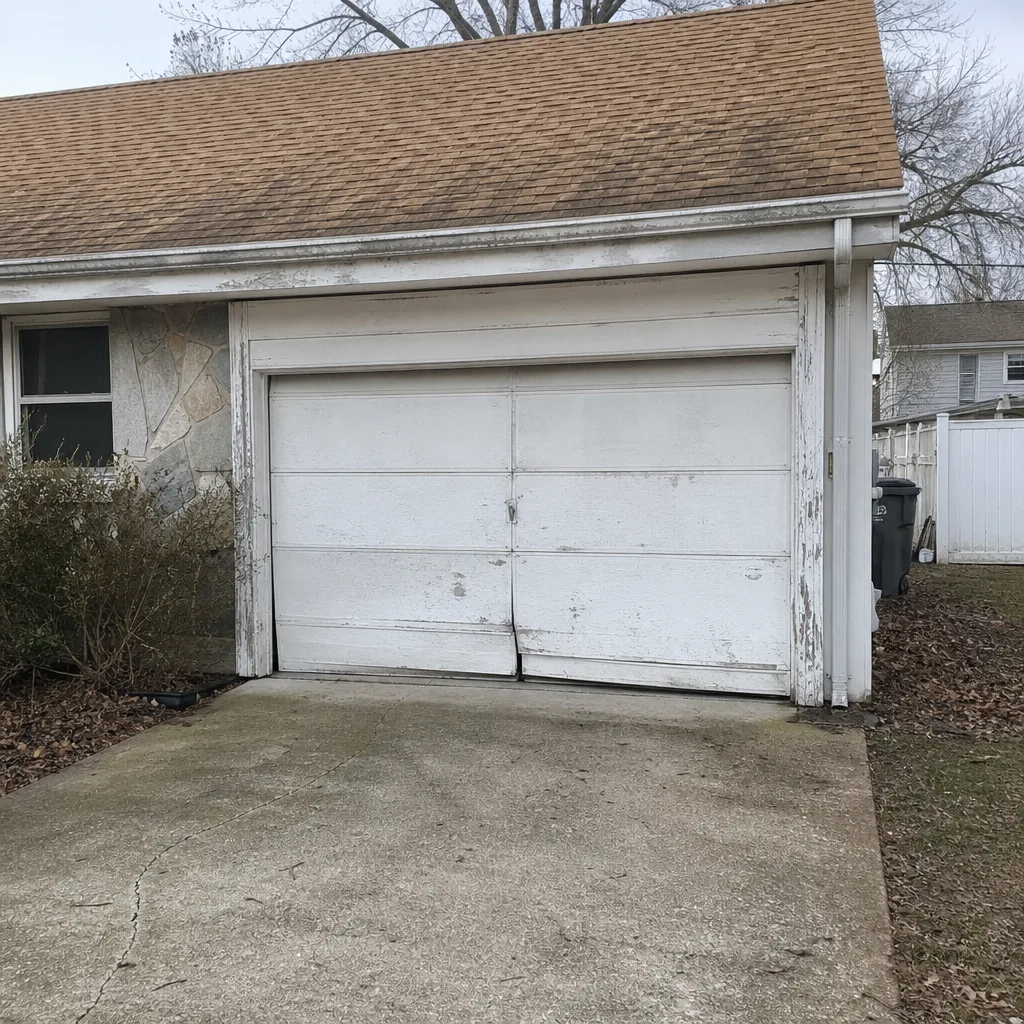 Before
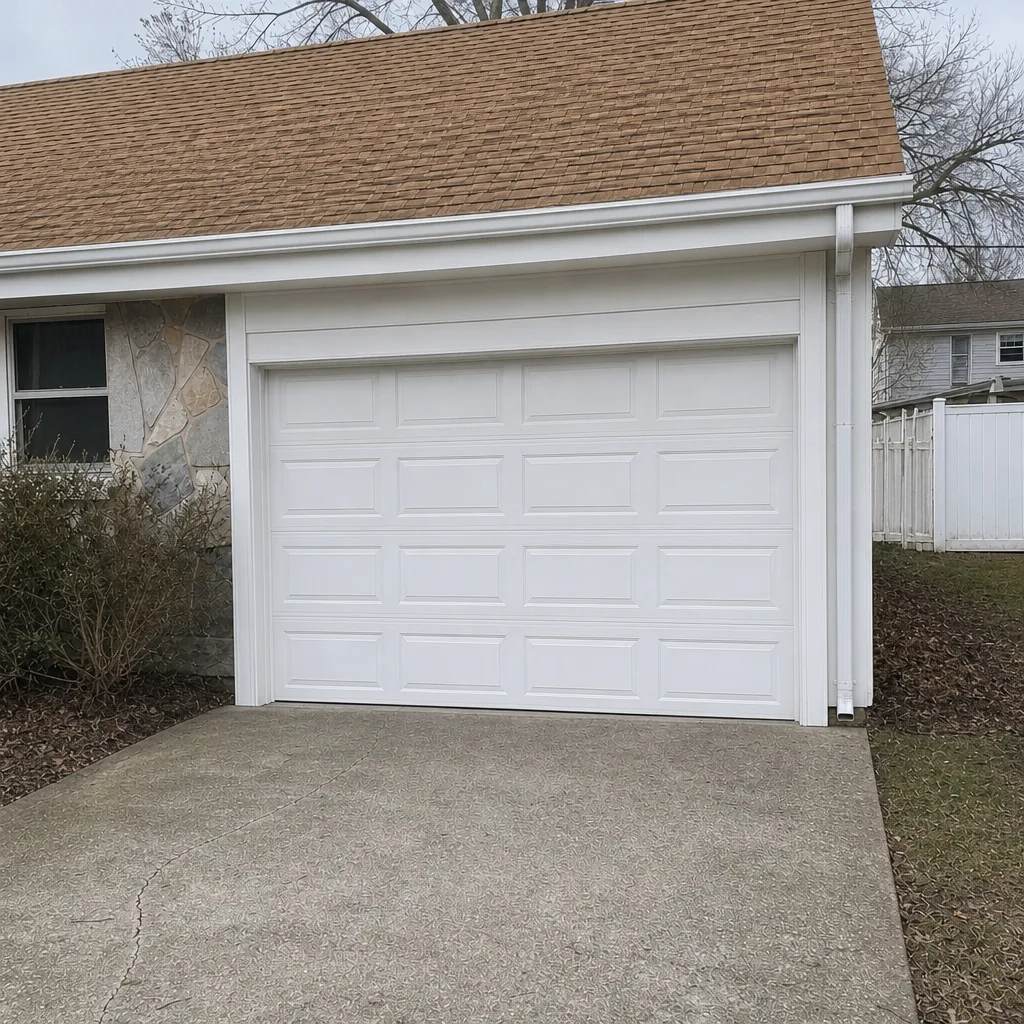 After
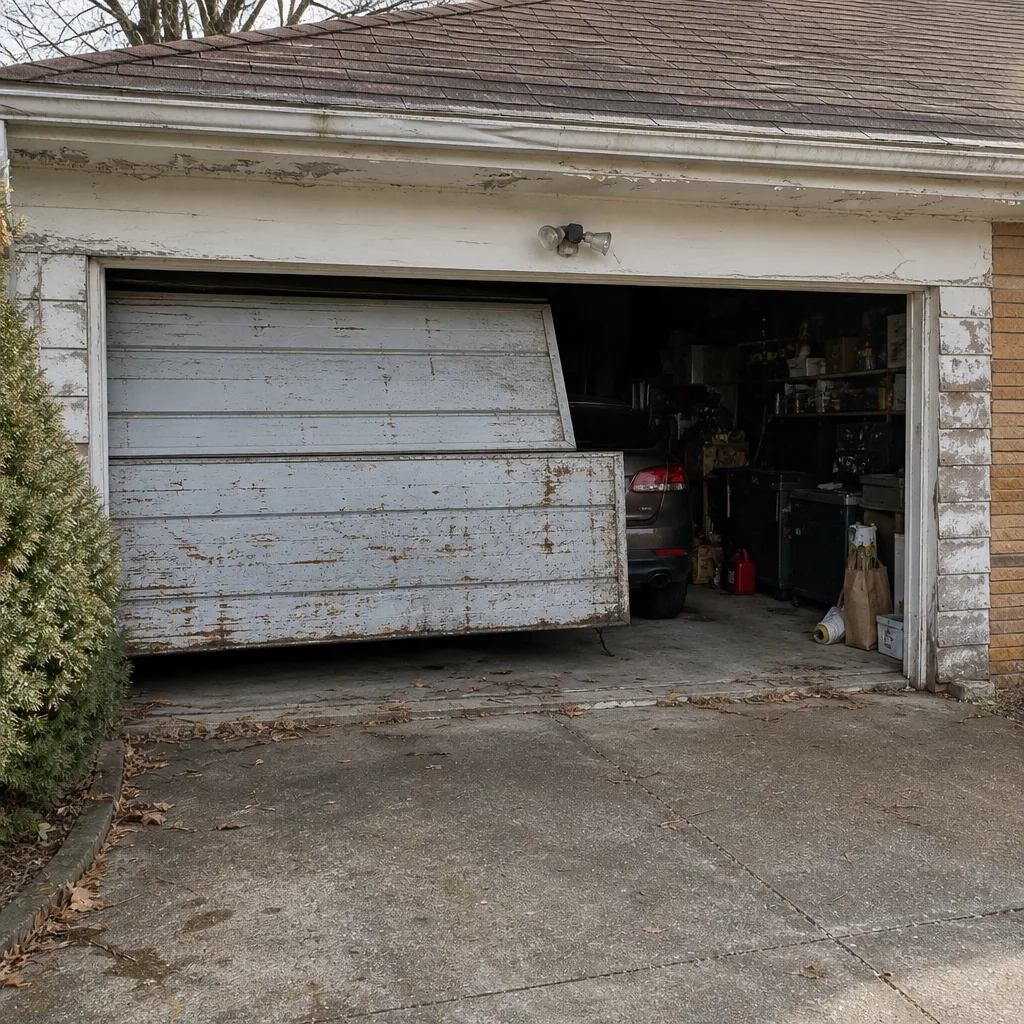 Before
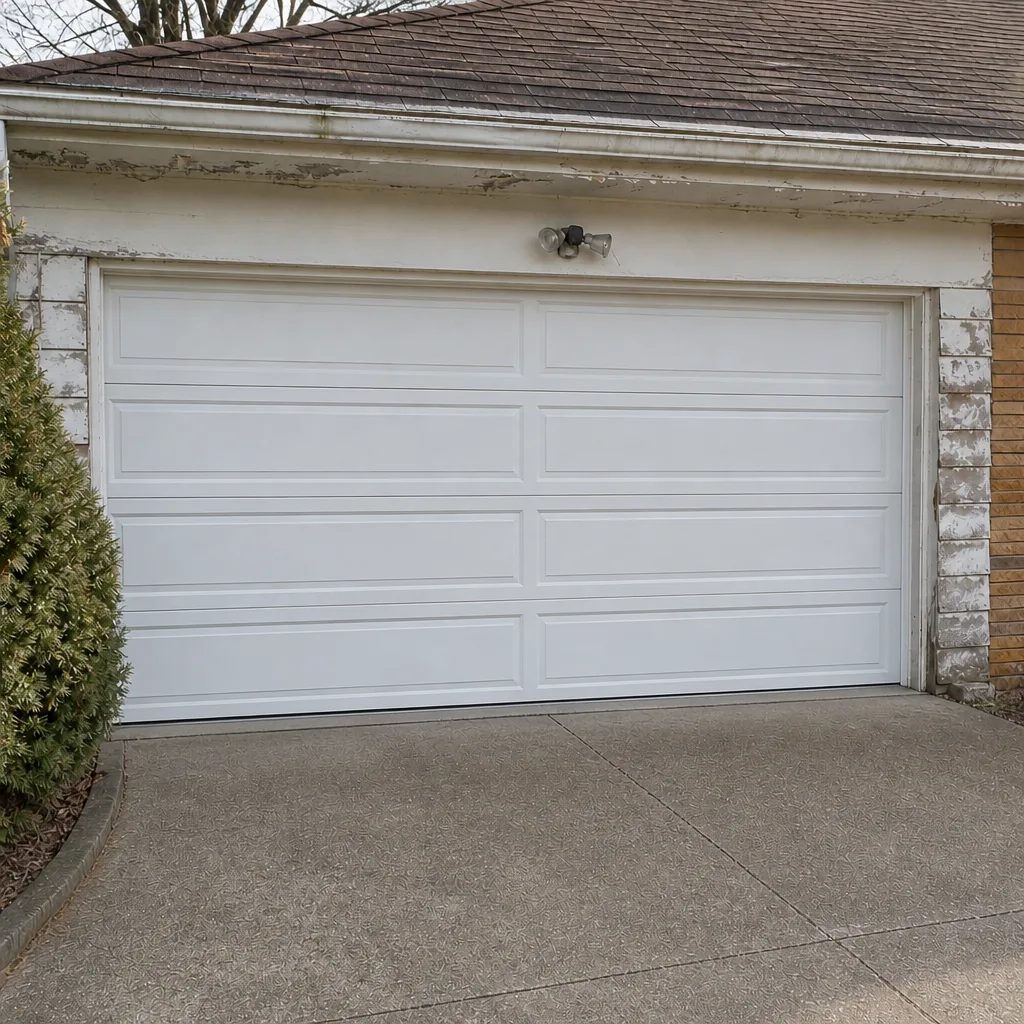 After
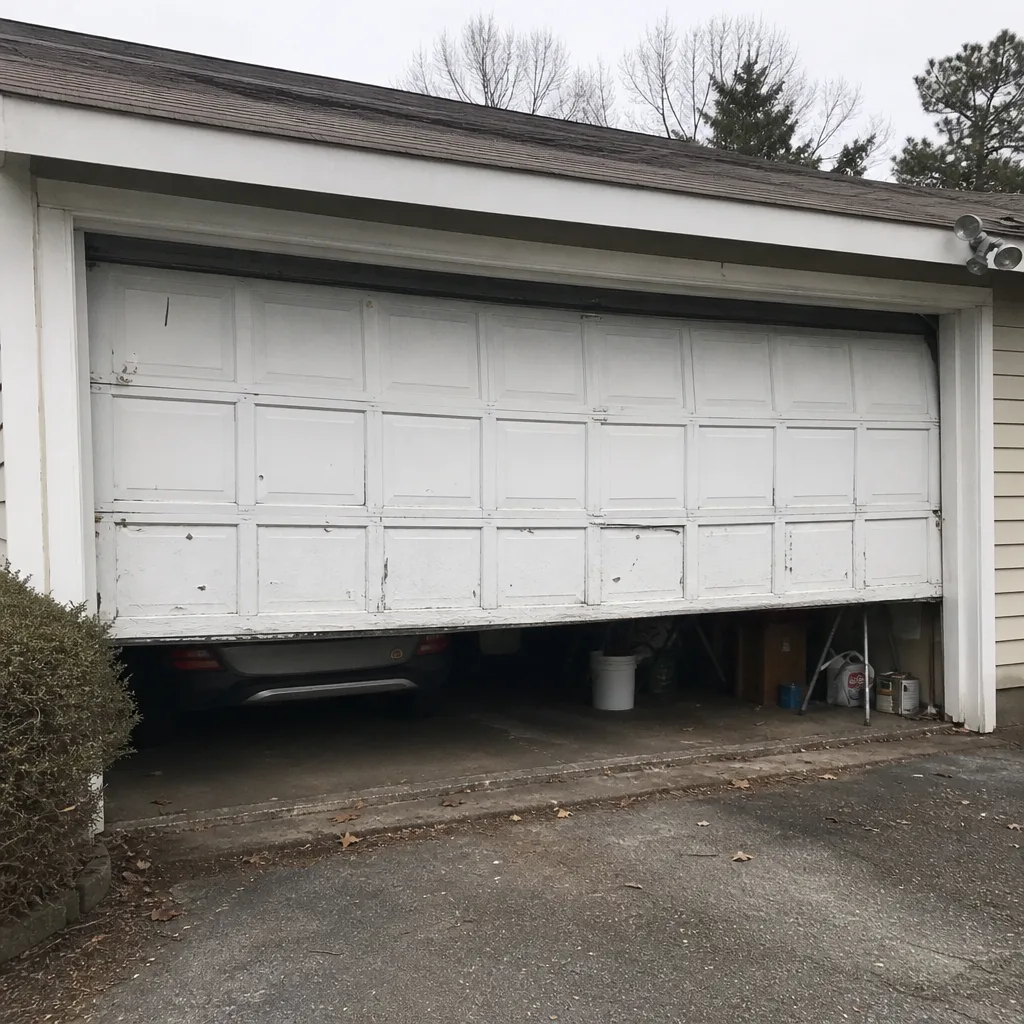 Before
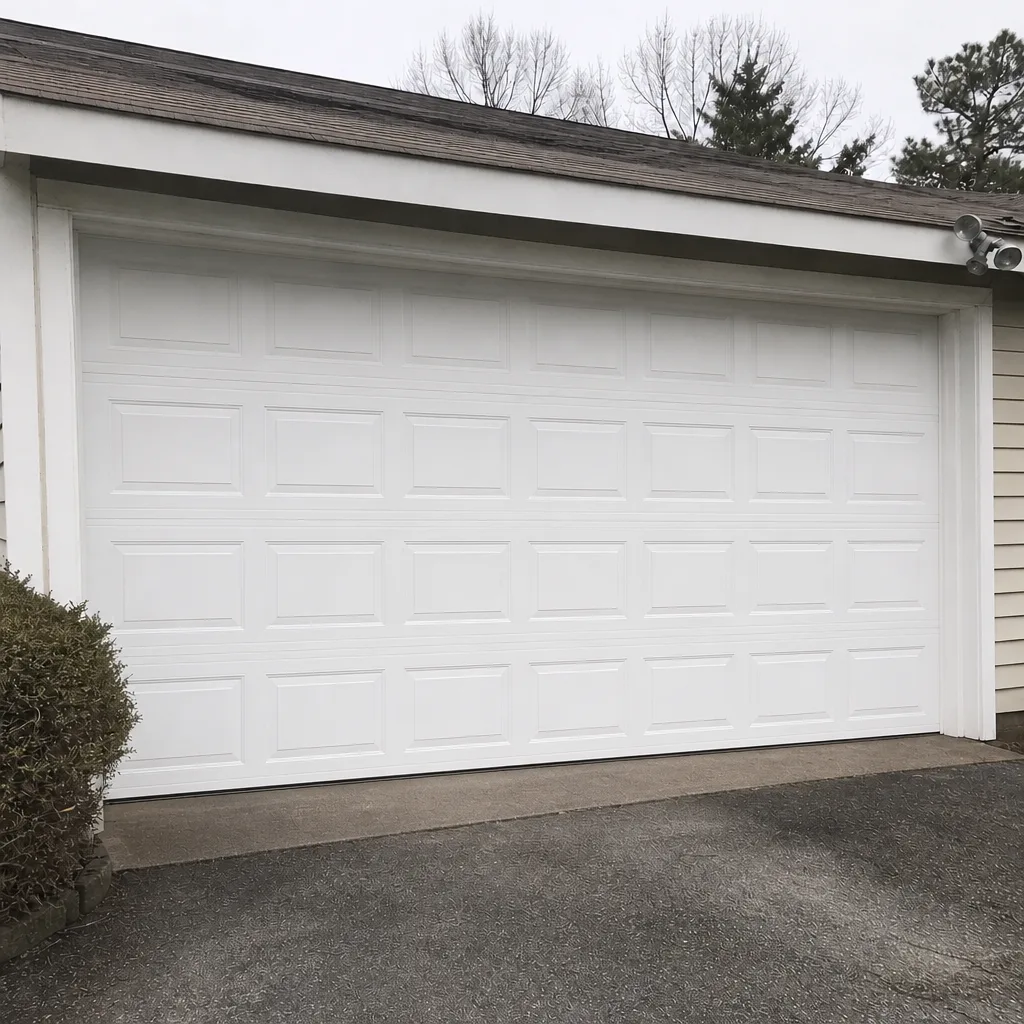 After
What an Inspection Actually Checks
An inspection for a permitted garage door project in West Babylon typically focuses on the parts of the work that touch structure, electrical, or safety. The door’s cosmetic finish isn’t the point. The inspector wants to see that the opening is properly framed, the header carries load correctly, the door operates safely, and any electrical work is compliant.
The specific items an inspector usually looks at:
- Header and framing: Correct size, correct connection, no sag or cut members.
- Opening dimensions: Match the permitted drawing.
- Door installation: Plumb, level, with proper clearances at the jamb and header.
- Safety features: Working auto-reverse mechanism and safety sensors where an opener is installed.
- Electrical wiring: Correctly installed, properly grounded, and accessible for future service.
- Energy code compliance: Documented R-value where required by the assembly.
- Label and documentation: Manufacturer’s product data available on request.
What an inspector generally doesn’t do: examine the springs for wear, check the gap at the bottom of the door, or tell you whether your rollers need replacing in the next six months. Those are maintenance and repair questions, separate from the permit process. If your current door is making noise, dragging, or struggling to close, that’s a repair conversation, not an inspection one.
If the inspection is part of a retroactive permit, expect correction items to be listed if anything doesn’t comply. Common corrections are opener wiring and safety sensor placement; both are simple to properly fix. Structural corrections are rarer and only occur when the original work wasn’t done to standard.
Why West Babylon Conditions Matter
Long Island’s weather does real work on a garage door over its lifespan. Cold winters with frost heave on garage slabs, humid summers that drive moisture into the wood of the opening, and occasional storm events that test every seal. None of that changes the code requirements themselves, but it does change how long a door “like-for-like” replacement stays that way. A door that fits the rough opening correctly with an insulated assembly holds up better to the seasonal swing than one that was squeezed into a slightly-off opening.
That matters for the permit question in one specific way: if the rough opening has shifted or been damaged by years of freeze-thaw cycling, “like-for-like” may need to become “framing repair,” which does cross the permit line. We see this most often on West Babylon homes that have been through several decades of Long Island winters without a framing check. Worth a look before you schedule installation, especially if the current door shows daylight at the bottom or sides.
Practical West Babylon guidance we give every customer:
- Have the rough opening measured and photographed before ordering.
- Ask the installer to note in writing whether the header and jambs are sound.
- If the door’s insulation value matters (garage under a bedroom or shared with living space), pick a door with published R-value documentation available from Clopay, Amarr, or a comparable brand.
- Keep the product documentation and any permit paperwork with the home’s file, not in a drawer that will get cleaned out.
None of this is exotic. It’s just the kind of thinking that heads off a permit question a few years earlier than it would otherwise show up.
Common Mistakes to Avoid
We’ve watched West Babylon homeowners hit the same handful of snags enough times that they’re worth calling out plainly:
- Assuming “new door” always means “no permit.” A like-for-like swap usually skips the process, but the moment the opening changes, the insurance of “it’s just a door” evaporates. Ask about the opening first, not the door.
- Adding an opener to a manual garage without checking. This is the most common permit miss. Replacing an opener is fine; installing one in a garage that never had one usually isn’t permit-free.
- Ordering the door before measuring the opening. A door that arrives too large for the rough opening forces a framing change that could’ve been avoided. Measure first, order second.
- Ignoring the header. A small sag or a prior repair that wasn’t documented is a common source of inspection problems. Have it reviewed before the new door goes in.
- Skipping the energy code on an attached garage. If the garage shares a wall or ceiling with conditioned living space, ask about the required R-value before selecting a door. Not after.
- Leaving an old permit open. If a previous owner left an open permit on the property, it doesn’t resolve itself. It waits, and it usually surfaces at the worst possible moment.
- Calling a general handyman for a permit-required job. Sketchy structural work isn’t the issue we see most often; improper sequencing is. A specialist knows which steps require the building department before the door comes down.
Each of these is preventible with one five-minute conversation before work begins. That’s cheaper than correcting one after a home inspection. If you’re unsure where your project falls, our team helps sort it out before the estimate, not after. See our garage door repair page if you’re starting from a repair question rather than a replacement one.
When to Call a Professional
Call a professional when the project involves spring work, opener electrical wiring, header or opening changes, or any job where you’re not certain of the permit category. Springs are the highest-stress, most dangerous component on any garage door, and a botched spring replacement is a genuine safety risk. Same for opener wiring: incorrect installation on a new circuit is not a DIY project. If your door has an issue today that needs diagnosis rather than replacement, a specialist can identify it quickly and tell you whether the fix is repair-only or one of the projects that triggers a permit question.
Garage Door Repair West Babylon offers free estimates in West Babylon. Call (855) 550-7512. We answer 24/7. Fast dispatch from 7am to 7pm, Sunday through Friday. Our technicians have up to 13 years of experience, we work on LiftMaster, Chamberlain, Genie, Clopay, Amarr, Wayne Dalton, Craftsman, and Raynor systems, and the price is quoted and agreed before any work starts. If it’s a spring job, our garage door spring repair team handles it directly, and for anything urgent, a stuck or off-track door is a safety and security issue, so call and we’ll get to it.
Frequently Asked Questions
Usually not, if the replacement stays inside the existing rough opening at the same size. You do need a permit when the work changes the opening, alters the structural header, or adds an electric operator to a garage that never had one. Confirm with the Town of Babylon building department for your specific project. Call (855) 550-7512 for an exact quote on the installation side; estimates are free.
Installing an electric operator in a garage that was previously manual typically requires an electrical permit. Replacing an existing opener usually does not, since the wiring is already in place. The distinction comes down to whether new electrical infrastructure is being added. Call (855) 550-7512 to talk through your situation; estimates are free.
New York State’s energy code sets a minimum R-value for garage door assemblies that sit within the home’s thermal boundary, meaning the garage shares a wall or ceiling with conditioned living space. The exact number depends on the code cycle and the assembly. Ask the Town of Babylon building department for the requirement that applies to your project. The manufacturer’s product data sheet from the door brand you choose will document the door’s actual R-value for inspection.
Yes. Unpermitted work can usually be retroactively permitted by pulling the appropriate permit, having the installation inspected, correcting anything that doesn’t meet code, and closing the permit. The result is documented and clear for a future sale. Start by pulling the property’s permit history from the Town of Babylon building department to see what’s on record.
No, in most cases. A straight replacement in the existing rough opening usually doesn’t show up as a permit issue at inspection. A buyer’s inspector may still note the age of the door or its condition, but that’s not a compliance question. The red flag comes when the work changed the structure or the electrical system without documentation.
No. Routine garage door repairs, including spring replacement, cable and roller work, track adjustment, and opener service, don’t require a municipal permit. The permit question only arises with new installations, structural changes to the opening, and new electrical work. For a repair estimate in West Babylon, call (855) 550-7512; estimates are free.
The Bottom Line
Garage door permits in West Babylon come down to one question: did the work change something beyond the door itself? A like-for-like swap in a healthy rough opening typically doesn’t need Town of Babylon approval. New openings, header changes, and first-time opener installations do. If you’re selling a home with unpermitted garage work, resolve it on your timeline rather than a buyer’s. If you’re buying, pull the permit history before you sign. Everything else in this guide is a variation on those rules. For any West Babylon project where you’re not sure which category applies, ask before the work starts. It’s a cheaper conversation than the one that happens after closing.
Call (855) 550-7512 for a free estimate. We answer 24/7. Fast dispatch from 7am to 7pm, Sunday through Friday. The price is quoted and agreed before any work starts, so the written estimate is what you pay.
Written by the team at Garage Door Repair West Babylon.