
Last updated November 23, 2026
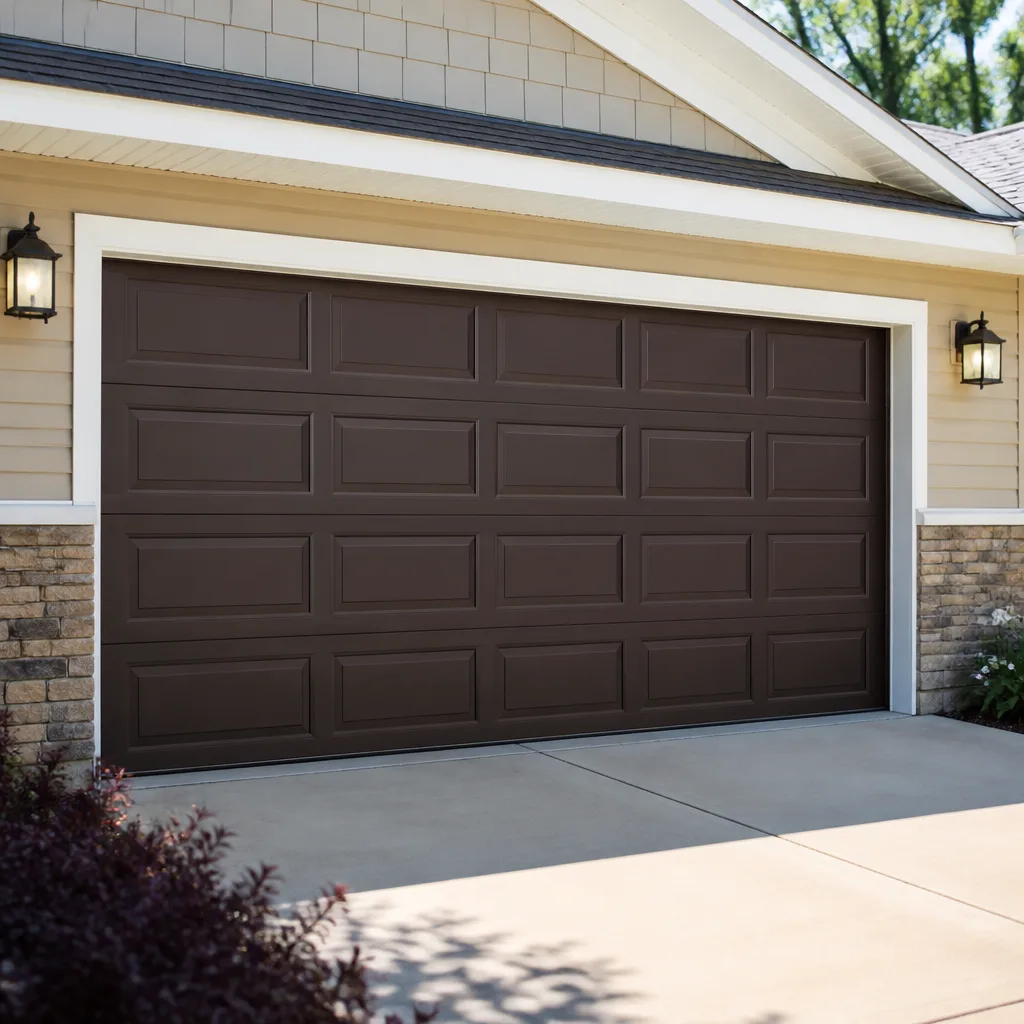 Raised-panel steel
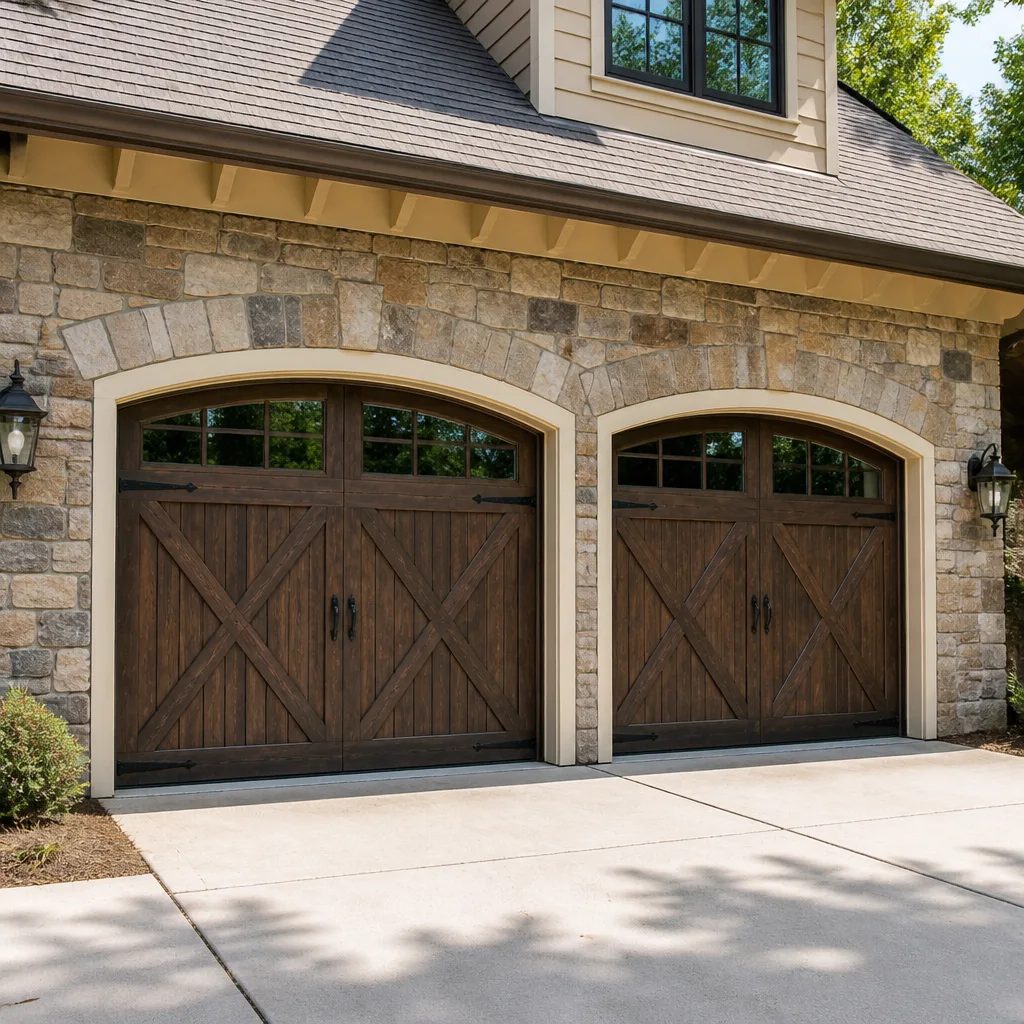 Carriage house
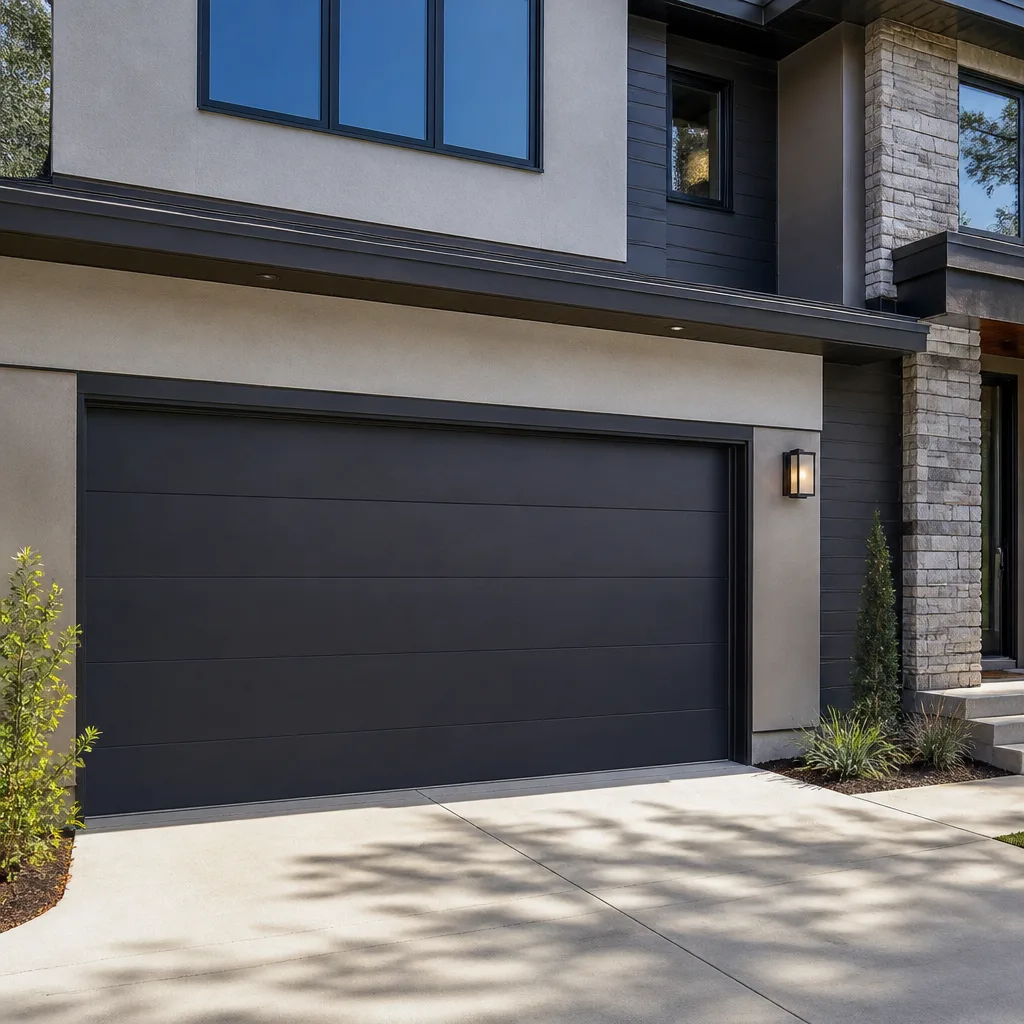 Modern flush
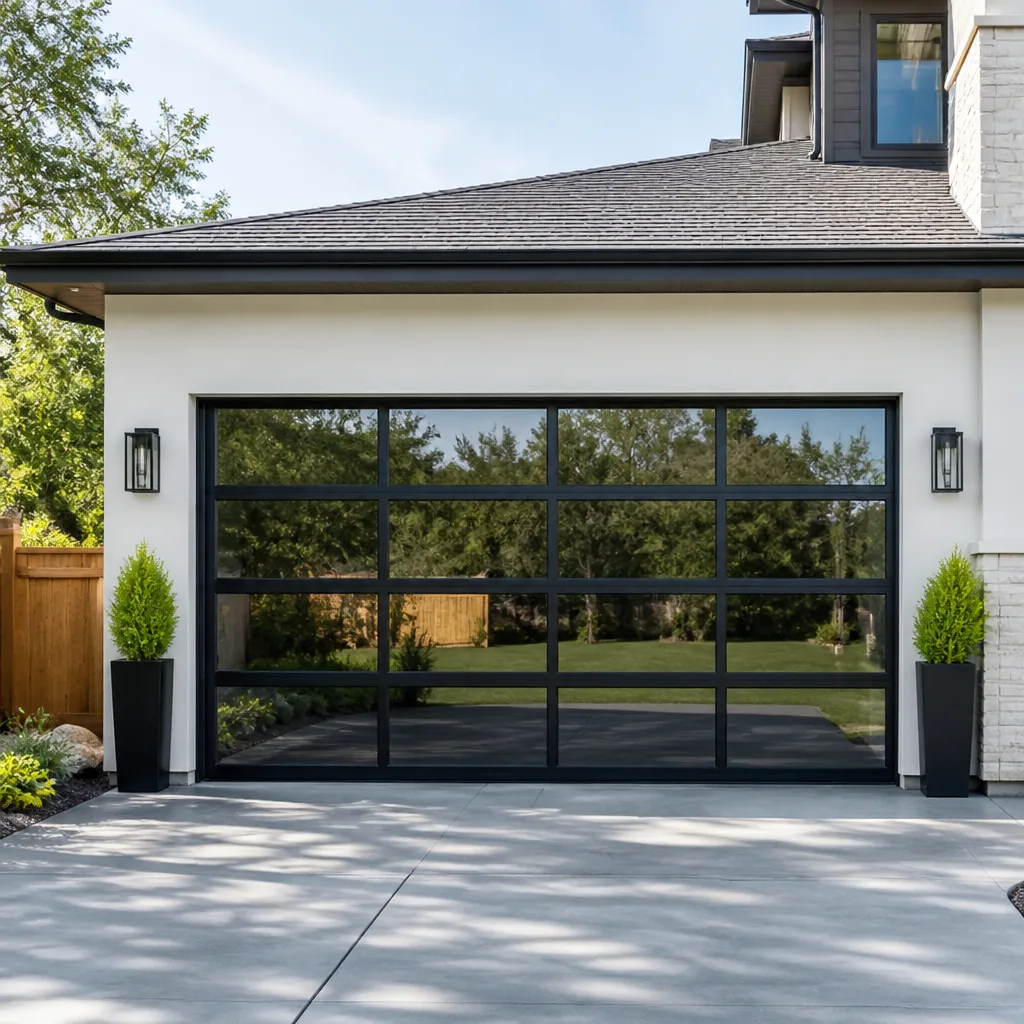 Full-view glass
 LiftMaster openers
 Chamberlain openers
Full 25-point door and opener safety check with every visit - springs, cables, rollers, tracks, and your LiftMaster or Chamberlain opener included
You get a price before we start. It does not change when the pro arrives.
Get your free estimateGarage Door Emergency Preparedness Guide for West Babylon Homes
Most garage door emergencies here don’t start with a snapped spring. They start with a homeowner pulling the red release cord during a storm. That one pull is supposed to be a controlled override, but on a door that’s under tension or half-traveling it leaves you with an unlocked opening, a carriage stuck in mid-air, and no way to re-engage until someone with the right tools shows up. Two very different problems get bundled together in most advice you’ll read: mechanical failure that traps your car or leaves the house open, and weather failure that tests whether the door holds. This guide separates them, so you prepare for the right one. We’ll cover what to do in West Babylon when a door won’t move, how to secure an opening without special tools, and how to vet a call you place in the middle of a storm.
Quick Answer
Garage door emergency preparedness in West Babylon means two separate plans: one for mechanical failure (a stuck, off-track or broken door that traps your car or leaves the house unsecured) and one for storm conditions (a door that has to hold against wind and water). For mechanical failures, secure the opening first and call a specialist; for storms, know your door’s wind rating and reinforcement before the forecast turns. Never manually release an opener unless you know how to re-engage it.
Styles & brands we work with
- Raised-panel steel
- Carriage house
- Modern flush
- Full-view glass
- LiftMaster openers
- Chamberlain openers
Table of Contents
- The Two Kinds of Garage Door Emergency in West Babylon
- The First 10 Minutes of a Door-Won’t-Open Emergency
- Manual Release and Re-Engagement: The Step Most People Get Wrong
- How to Secure an Open or Stuck Door During a Storm
- Storm Preparation Checklist for Long Island Doors
- What “Wind-Rated” Actually Means for a West Babylon Door
- How to Vet an Emergency Call Before You Give a Credit Card
- Repair or Replace? Deciding After the Emergency Passes
The Two Kinds of Garage Door Emergency in West Babylon
Treat these as separate problems, because the preparation is different and the first response is different. Confusing them is how people end up either stranded in their driveway or with an open hole in the side of the house during a storm.
Mechanical emergencies happen on an ordinary Tuesday. A torsion spring snaps, a cable jumps its drum, a roller pops out of the track, or an opener gear strips and the door stops halfway. The car is inside. The house is open. Nothing about the weather is involved.
Weather emergencies happen when the door has to perform under load. A door that cycles fine in calm conditions can flex, bind or fail to close under wind pressure, and a door left open or unsecured during a storm becomes the weakest point in the building envelope.
In West Babylon, both are common for the same underlying reason: the door works harder than most homeowners realize. Daily cycling plus seasonal temperature swings put real wear on springs and cables, and the flat, open geography of the south shore means wind reaches doors with little to slow it down. A door that’s marginal in April becomes a problem in a nor’easter.
Here’s the practical split:
- Mechanical: secure the opening, keep people clear of the door, call for Garage Door Repair West Babylon.
- Weather: get the door closed and locked, reinforce if you have brackets, and only then assess mechanical damage.
- Both at once: secure the opening first, weather second. An open door in a storm is a bigger problem than a car that can’t get out.
The First 10 Minutes of a Door-Won’t-Open Emergency
The first few minutes set the tone for everything after. What you don’t want to do is stand there cycling the opener button, which is the most common reaction and the one that turns a repairable problem into a damaged opener and a door stuck off-track.
Work through this in order:
- Stop pressing the button. If the door moved partway and stopped, the opener has already hit its travel limit or the door has bound. Repeated attempts strip the gear and can bend panels.
- Get people and cars clear. A door under tension can drop. Keep everyone out from under it, and don’t park directly in front of it while you assess.
- Look, don’t touch. From the side and at a safe distance, check whether the door is level, whether a cable is hanging loose, whether a spring above the door looks separated. Never reach into the spring area or try to lift a door with a broken spring by hand.
- Open the opening another way. If you have a second exterior door, use it. If the garage door is the only way in or out of the house, secure from inside and call.
- Secure the opening. If the door is open and won’t close, secure it as covered further down. If it’s closed and won’t open, the house is locked, which is the safer of the two failures.
- Decide: fix or call. Loose debris in the track, a tripped breaker on the opener circuit, or a dead remote battery can be a homeowner fix. A broken spring, a cable off its drum, an off-track door or a bent panel is a call, not a project.
If you’ve gotten to step six and it’s a spring, a cable or a track, that’s the moment to stop. Springs are the most stressed part of any garage door system and the most dangerous to touch, and we’ve seen what happens when a wound torsion spring is released without the right winding bars. If that’s what you’re looking at, get a technician out.
Manual Release and Re-Engagement: The Step Most People Get Wrong
Every automatic opener has a manual release so you can operate the door by hand in a power outage. The release itself is easy. The re-engagement is where it goes wrong, and it usually goes wrong at the worst possible time: during a storm, with the door open and the house exposed.
The release works the same way across the major openers installed in this area, including LiftMaster and Craftsman units. A red or colored handle hangs from a cord attached to a carriage that rides the rail. Pulling it disconnects the carriage from the chain or belt, and the door can then be lifted by hand.
How to release it deliberately
- Close the door fully first if you can. Releasing a half-open door under tension lets it drop.
- Pull the release handle straight down and back, firmly and once. Don’t yank the cord repeatedly; the carriage can jam on the rail.
- Lift the door slowly by hand. If it’s very heavy or won’t stay up, stop. That’s a spring problem, and the door should come back down.
How to re-engage it
- With the door fully closed, pull the release handle again in the same direction so the carriage reconnects, or press the opener button once. On most units one of those two actions re-latches the carriage.
- If the carriage won’t re-engage, check that it’s positioned over the rail correctly and not jammed against the trolley stop.
- Press the opener button. The door should travel a short distance and stop at its limit. If it travels oddly or reverses immediately, the carriage is engaged but out of adjustment.
If the re-engagement mechanism is damaged – the carriage won’t latch, the cord is broken, or the opener runs without moving the door – the door is now a manual door. Don’t leave it that way overnight or through a storm. A manual door will not stay locked, and on many older doors the manual lock bar has been disconnected to accommodate the opener. That’s a same-day call for garage door opener repair, not a next-week appointment.
How to Secure an Open or Stuck Door During a Storm
If the door is open and won’t close, or stuck partway, your job is to close the opening with what you already have in the garage. You don’t need special tools, and you should not try to force the door down the track.
Two approaches, depending on whether the door is fully open or stuck partway:
Fully open and won’t come down
- Clamp the rollers. C-clamps or locking pliers clamped onto the vertical track just above a roller prevent that roller from traveling upward. This stops the door from rising further. This is a hold, not a fix.
- Block the bottom section. Place sturdy material – a board, a folded moving blanket – at the base to reduce wind-driven water entry.
- Engage the manual lock bar if the door still has one. Many doors that were converted to automatic openers have a slide bolt or lock bar that was disconnected. If yours is still functional, engage it.
Stuck partway
- Clamp both vertical tracks above the top roller at the current height. This keeps the door from moving further while you wait.
- Do not lift or push the door to close it. A door stuck partway is usually off its cable or track. Pushing it can drop a panel.
- Lock the entry from inside if the opening is large enough for access, and treat it as an unsecured door until a technician arrives.
Be clear with yourself about what these steps do. They buy you time and reduce exposure. They don’t make the opening secure for a multi-day wait, and they don’t make the door safe to operate. Get a technician scheduled the same day you clamp the door.
Storm Preparation Checklist for Long Island Doors
Most of the difference between a door that comes through a storm and one that doesn’t is made before the forecast, on a calm day. Run through this list once in early spring and once in late fall, when the seasonal temperature swings do the most damage to springs and hardware.
- Test the balance. Release the opener, lift the door halfway by hand, and let go. A balanced door stays put. A door that sinks or rises on its own needs an adjustment, and it’s under more strain than it should be.
- Check the springs and cables visually, from a safe distance and from the side. Look for separation in the spring, fraying on the cable, or slack cable on the drum. Don’t touch.
- Look at the tracks. Any bend, gap or loose bracket means the door isn’t traveling cleanly and will flex under wind load.
- Walk the weather seal. A perished bottom seal lets wind-driven rain in and lets the door rattle under pressure.
- Test the auto-reverse by putting an object in the door’s path and confirming it reverses. This is as much a storm check as a safety check.
- Know your hardware. If your door has reinforcement brackets or a wind-load label, confirm the brackets are still fastened and in place.
- Note your opener model. Having the model and brand written down – LiftMaster, Genie, Craftsman, whatever you have – speeds up a call when the door is open and you’re standing in the rain.
Our technicians have up to 13 years of experience, and the pattern we see is consistent: doors that fail in a storm usually showed a warning on this list weeks earlier. A door that needs a shove to close, or that rattles above a certain wind speed, was telling you something.
What “Wind-Rated” Actually Means for a West Babylon Door
A wind-rated label means the door was tested to hold up under a stated design pressure, expressed as a rating the manufacturer publishes. It doesn’t mean the door is storm-proof, and it doesn’t mean a properly rated door will hold up if the tracks are bent, the springs are tired, or the reinforcement brackets were removed or never installed.
That distinction matters in West Babylon, where homes sit in an exposed, flat stretch of Long Island with little to slow wind coming off the water. When a storm tests a door, it tests the whole assembly: panels, hinges, tracks, springs, and the brackets that tie the door to the framing. A door rated for a given wind load but installed with light anchors or missing brackets doesn’t meet that rating in practice.
A few things to actually check:
- Look for the label or documentation. If you can’t find it, ask the door’s manufacturer, which for many homes here is Wayne Dalton, Clopay or another of the brands installed across Long Island subdivisions.
- Ask about reinforcement brackets. Some doors need aftermarket or factory brackets to meet their rated wind load, and a previous installation may have left them off.
- Know your failure point. A door rated to a lower pressure is not unsafe; it’s a different point at which it may flex or come off its tracks. That’s useful information to have before a storm, not during one.
- Trust the tracks, not just the door. A rated door on weak or loose tracks won’t perform to its rating.
If you’re unsure what you have, a technician can tell you what your door is rated for and whether the reinforcement is there. That’s a short visit on a calm day, and it’s a lot more useful than finding out during a storm. Our team works on products from Wayne Dalton, Clopay, Amarr, Raynor and other major brands, so whatever is on your house, we’ve seen the installation.
How to Vet an Emergency Call Before You Give a Credit Card
Price gouging is real during a storm or a cold snap, and the way to avoid it is to ask a handful of questions before you book, not after you get a bill. A competent garage door company will answer every one of these without hesitation.
Ask:
- “Will I get a written estimate before any work starts?” You should get an estimate you can read before a technician touches the door. The price is agreed before the work starts, and the written estimate sets the final price. If a company won’t put a number in writing, that’s your answer.
- “How is the price set for this job?” The right answer is per job, based on what’s actually wrong with the door, not a flat emergency rate quoted over the phone before anyone has seen it.
- “Is the technician qualified on my brand?” Springs, openers and tracks differ across manufacturers. A technician who works on LiftMaster, Chamberlain, Genie, Clopay, Amarr, Wayne Dalton, Craftsman and Raynor systems will have seen your setup.
- “Are the technicians experienced with my problem?” A snapped spring and a door off its track are different jobs with different risks. Ask whether the person coming out handles that specific issue.
- “When can you get here?” We answer 24/7, and crews are sent with fast dispatch, 7am-7pm, Sunday through Friday. A call that comes in outside that window gets booked into the next opening.
- “What should I do with the door while I wait?” A company that knows what it’s doing will tell you how to secure the opening and keep people safe until a technician arrives.
- “What’s your satisfaction guarantee?” Ask what happens if the repair doesn’t hold. The answer should be clear and specific.
Write down the name of who you speak to, the estimate you were quoted and the job details before you give a card number. If any of it changes once the technician is at the door, ask for the reason in writing before the work begins.
Repair or Replace? Deciding After the Emergency Passes
Once the door is fixed and the immediate crisis is over, you’ve got a decision to make. A garage door that has failed once in bad conditions is more likely to fail again, and the repair-or-replace question is worth asking honestly.
Repair usually wins when:
- The failure was isolated – one spring, one cable, one roller – and the rest of the door balances and travels cleanly.
- The panels are sound and the tracks are straight.
- The door is equipped with what you need, and the opener is working.
Replacement is worth considering when:
- The door has multiple failures in a short stretch – a spring this year, a cable the next.
- Panels are bent or dented and the door rattles or binds in its tracks.
- You want a higher wind rating than the current door carries, or the door was installed without the reinforcement its rating requires.
- The opener is failing alongside the door, and the mechanical and electronic problems are starting to overlap.
We’ll always tell you which of those two you’re looking at, and we don’t push replacement when a repair will do. For the repair side, see our garage door repair page; for a spring failure specifically, garage door spring repair covers what’s involved and why a matched pair is usually replaced together. If you do decide to replace the door, we handle the full installation, so you’re not handed off between a repair company and an installer.
Common Mistakes to Avoid
- Pulling the manual release during a storm without a plan to re-engage. The door ends up open and unlocked, and the opener won’t work until the carriage is re-latched or repaired.
- Repeatedly pressing the opener button on a door that stopped partway. The gear strips, the door binds further, and what was a spring repair becomes a spring plus opener repair.
- Trying to fix a broken spring yourself. Springs are the most stressed part of the system and the most dangerous to handle. There’s no homeowner-safe way to release and rewind a torsion spring without the right tools and training.
- Assuming a wind-rated label means the door is ready. Rating, brackets, tracks and springs all have to work together. Check the installation, not just the sticker.
- Booking the first emergency number you find without asking for a written estimate. Storm-time pricing is where the bad actors show up. Ask the questions before you give a card number.
- Waiting until the night before a storm to check the door. Springs, seals and brackets are the things you want to know about on a calm day, not with a forecast closing in.
- Using C-clamps as a permanent fix. They’re a hold for a few hours while you wait for a technician, not a solution. A clamped door is not a door you can operate.
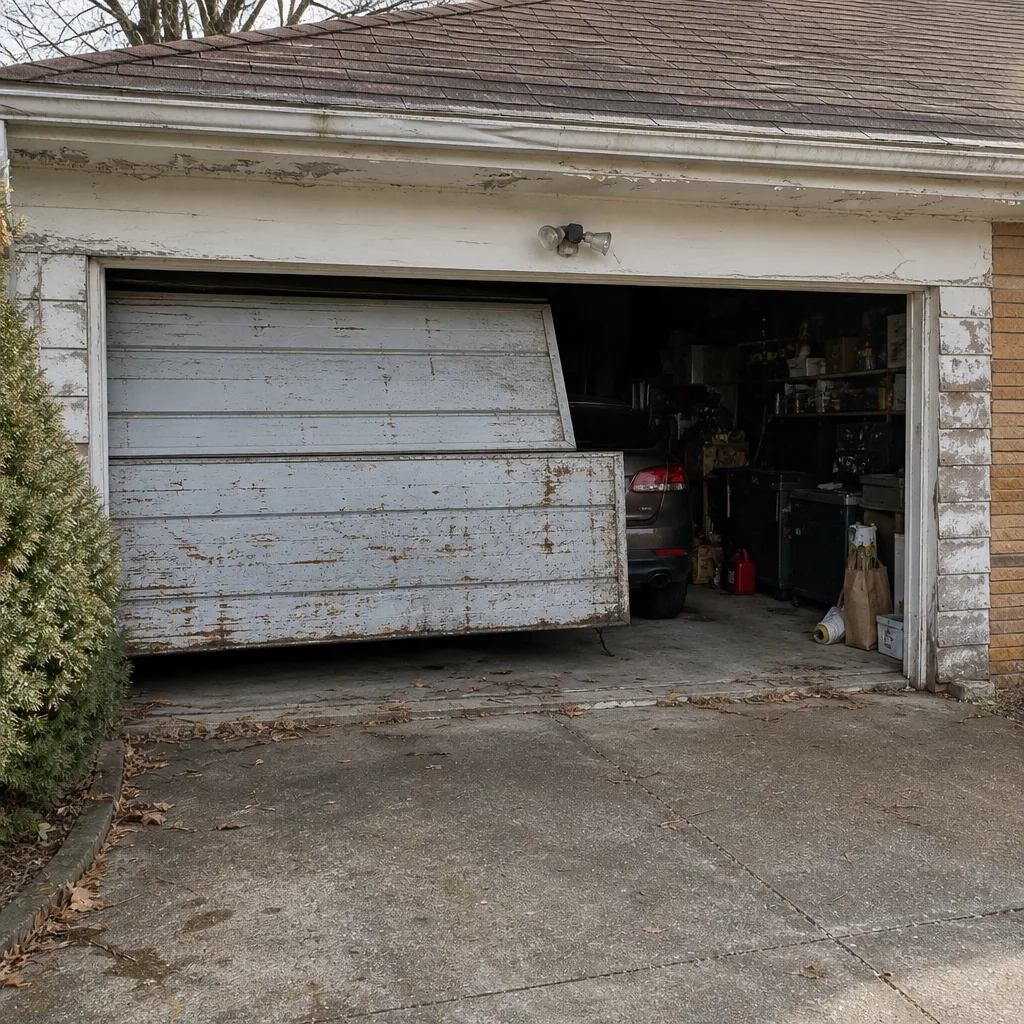
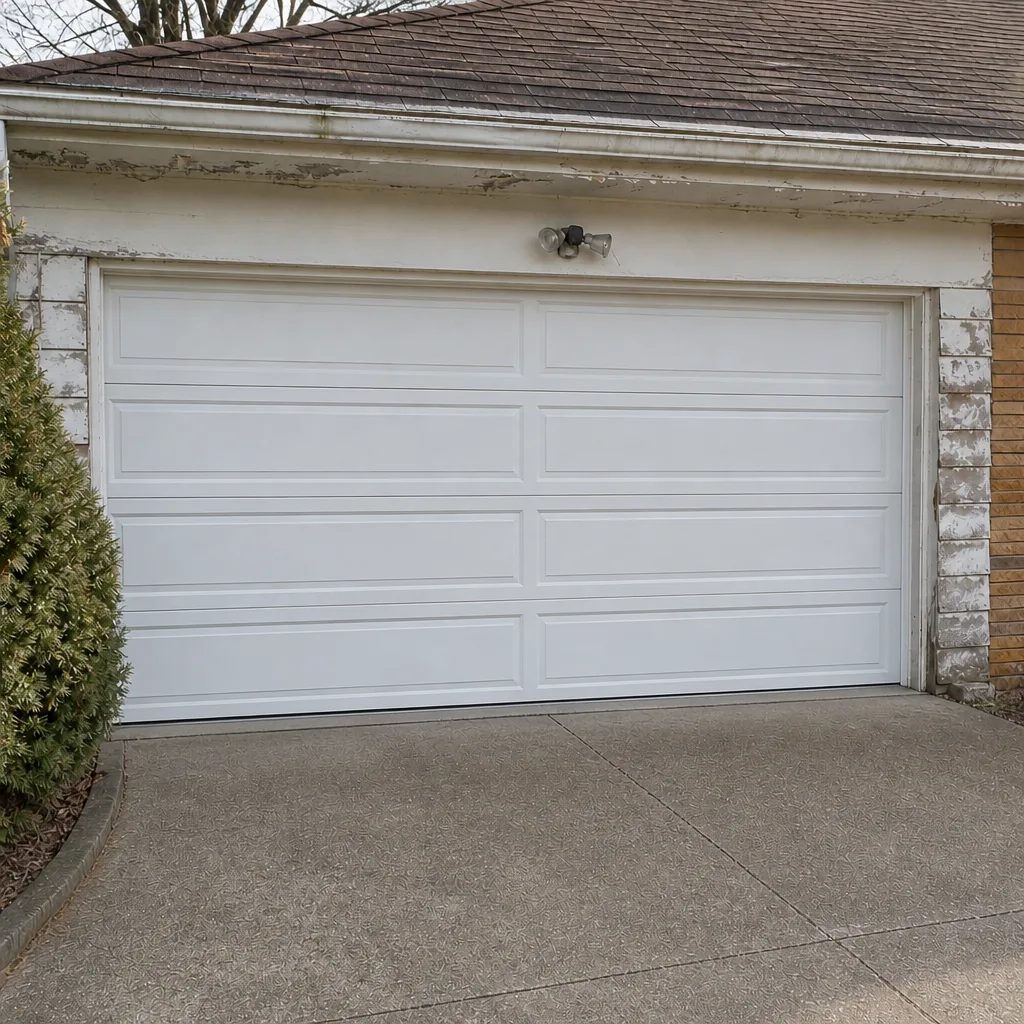
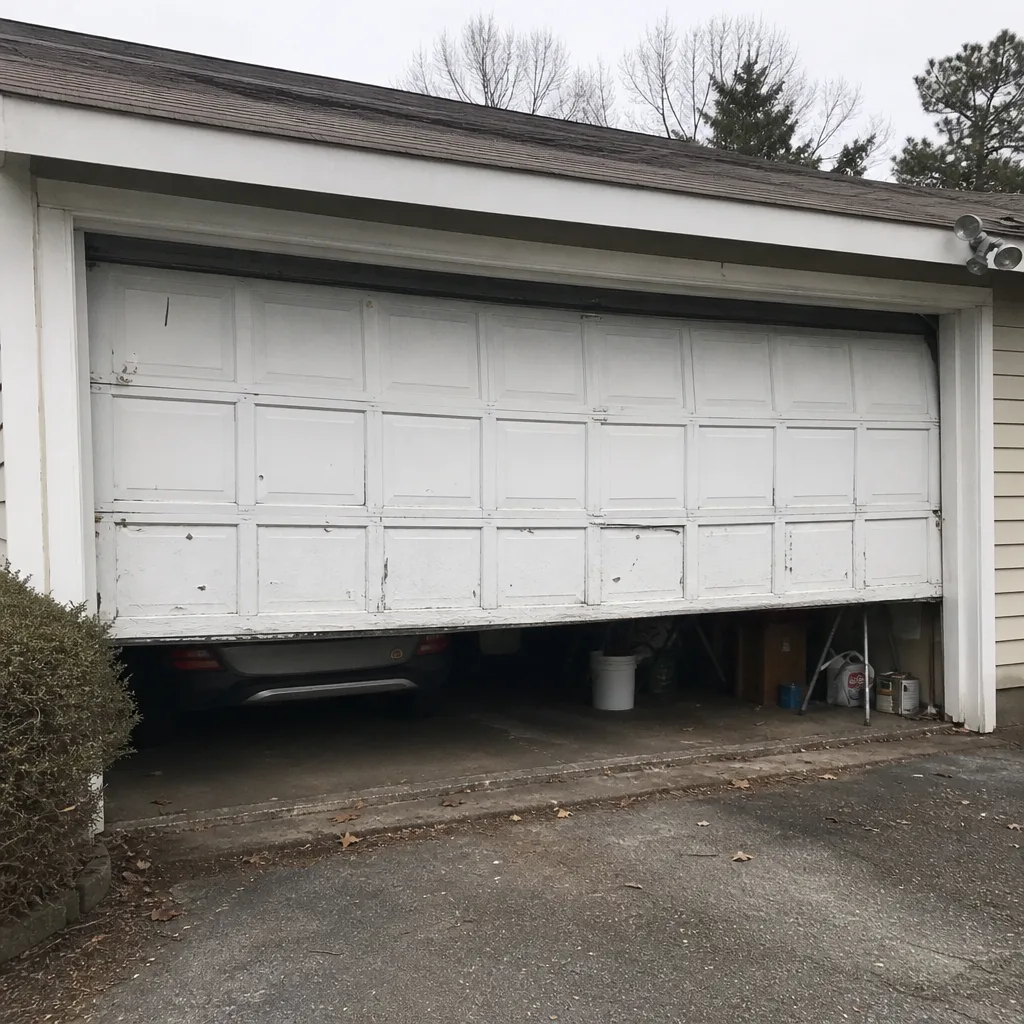
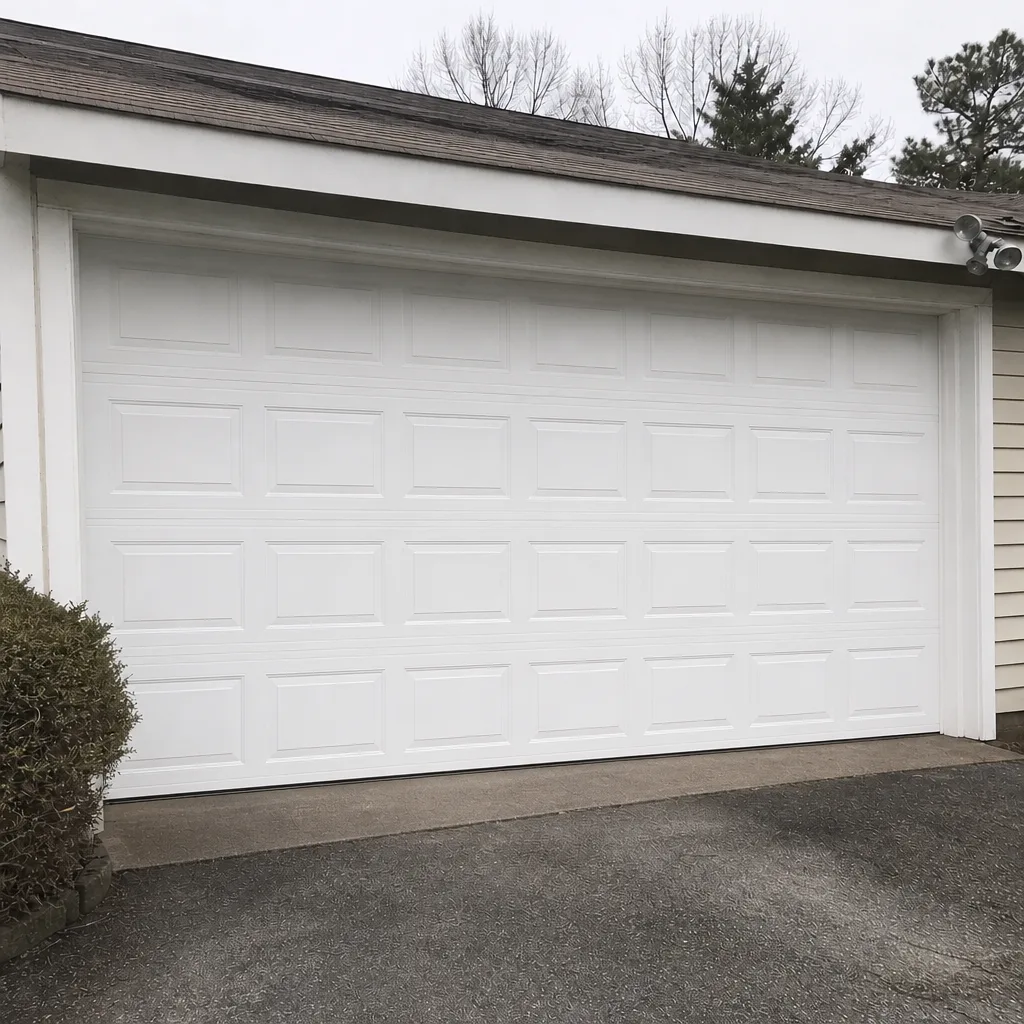
See the difference
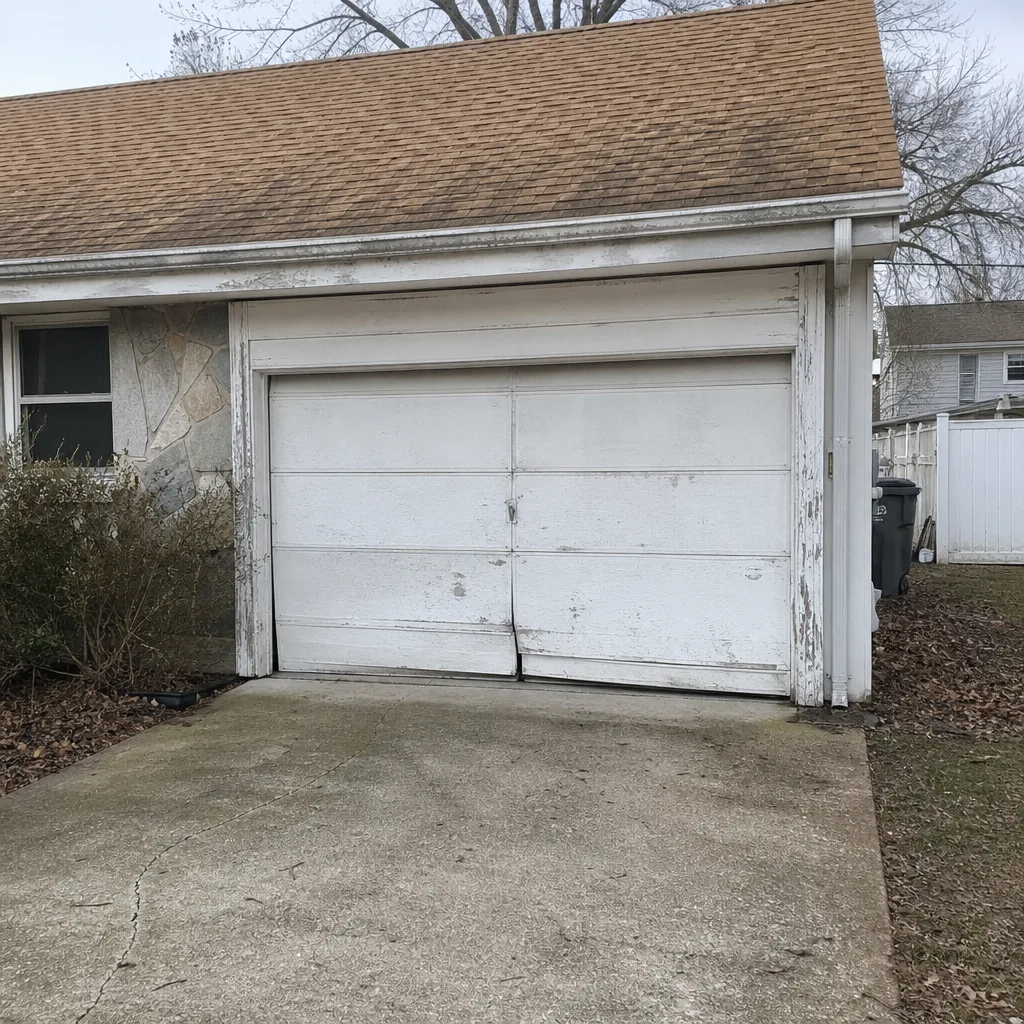 Before
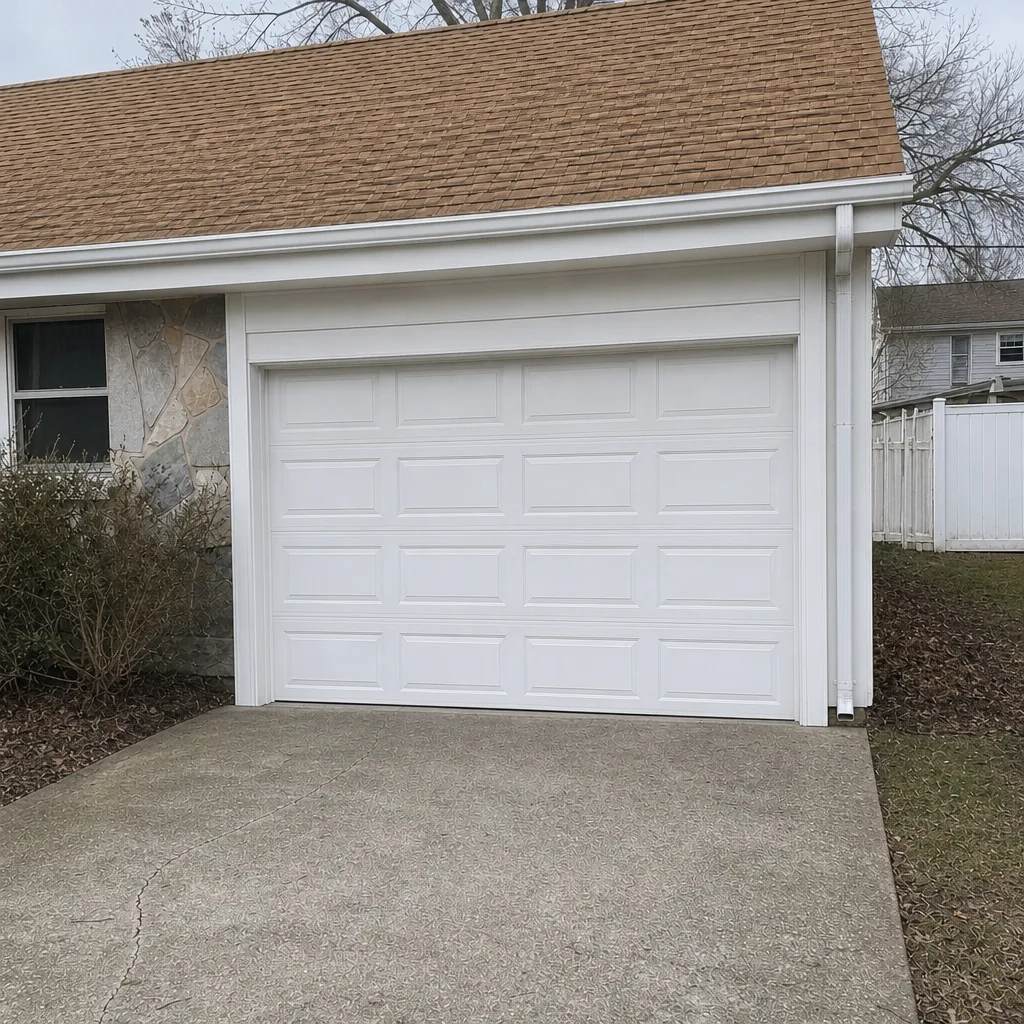 After
 Before
 After
 Before
 After
When to Call a Professional
Call a specialist when the door is off its track, when a spring has broken or a cable is loose, when the opener runs but the door doesn’t move, when the door won’t stay closed against the weather, or when you’ve had to clamp or block the opening. Call us when you’re not sure – if the door is unsafe to operate, a wrong guess makes it worse. Emergency garage door service exists for exactly the situations that can’t wait: a stuck or off-track door is a security problem as much as a mechanical one.
Garage Door Repair West Babylon offers free estimates in West Babylon – call (855) 550-7512. We answer 24/7, with fast dispatch from 7am to 7pm, Sunday through Friday, and our technicians have up to 13 years of experience. The estimate is free, the price is agreed before any work starts, and the written estimate sets the final price.
Frequently Asked Questions
Stop pressing the opener button, keep people clear of the door, and check whether it’s closed and locked or open and exposed. If it’s open and won’t close, secure it by clamping the vertical tracks above the rollers and call a technician. Call (855) 550-7512 for an exact quote – estimates are free.
Yes, an off-track or stuck door is a same-day call, because the opening is unsecured and unsafe to operate until it’s repaired. We answer 24/7, and crews are sent with fast dispatch from 7am to 7pm, Sunday through Friday. Call (855) 550-7512 to book.
The price depends on the failure: a broken spring, a cable off its drum, an off-track door and a failing opener are different jobs with different parts. We quote per job, and the estimate is free and given in writing before any work starts. Call (855) 550-7512 for an exact quote – estimates are free.
No, the price is agreed from the written estimate before any work starts, and that estimate sets the final price. If a technician finds something that genuinely changes the job, you’ll be told why and given a revised estimate before the work continues. Call (855) 550-7512 for an exact quote – estimates are free.
Only if you can safely operate and re-engage the door by hand, and only if you don’t need the door locked while it’s released. Pull the release, lift the door slowly, and re-engage the carriage by pulling the handle again or pressing the opener button. If the carriage won’t re-latch, the door is a manual door until it’s repaired. Call (855) 550-7512 for an exact quote – estimates are free.
The local professionals we connect you with are licensed and insured as their state requires, and we work across the major brands installed in West Babylon homes, including LiftMaster, Chamberlain, Genie, Clopay, Amarr, Wayne Dalton, Craftsman and Raynor. Our technicians have up to 13 years of experience. Call (855) 550-7512 to book an estimate.
The Bottom Line
Garage door emergencies in West Babylon split into two tracks: mechanical failures that trap the car or leave the house open, and weather failures that test whether the door holds. Treat them separately. For a mechanical problem, stop pressing the button, secure the opening, and recognize a spring, cable or track problem as a call, not a project. For a storm, know your door’s rating, check your brackets and springs on a calm day, and don’t pull the manual release unless you can get it back. And before you hand a card number to anyone during a crisis, ask for a written estimate. That single question filters out almost everyone you’d want to avoid.
Written by the team at Garage Door Repair West Babylon.