
Last updated November 23, 2026
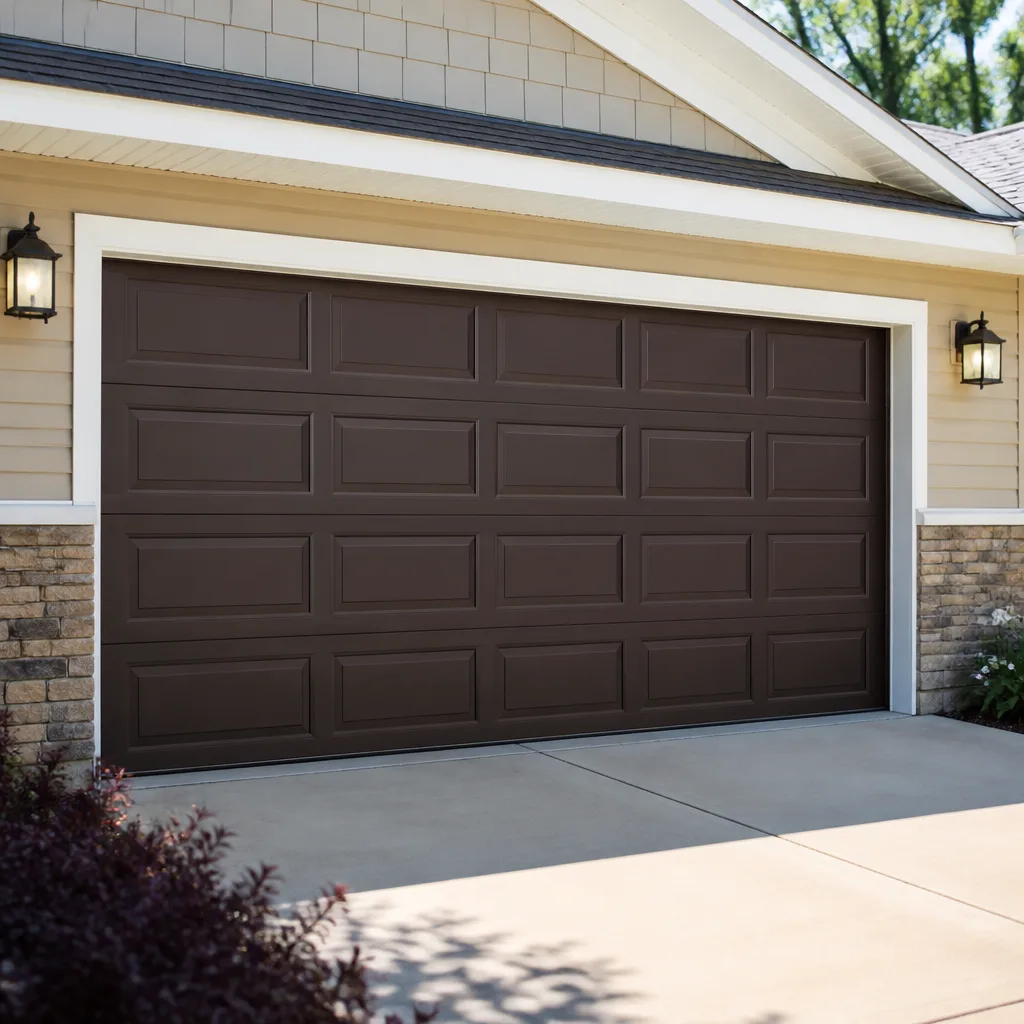 Raised-panel steel
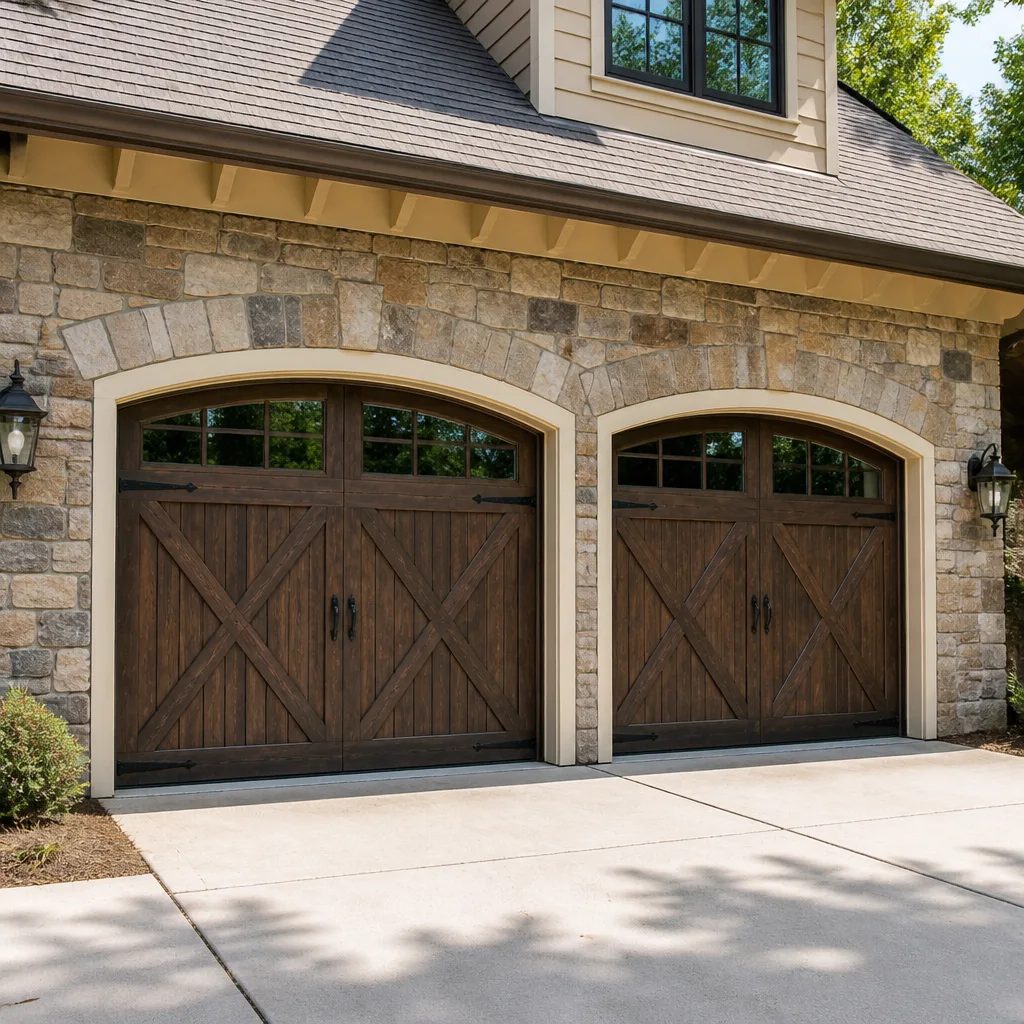 Carriage house
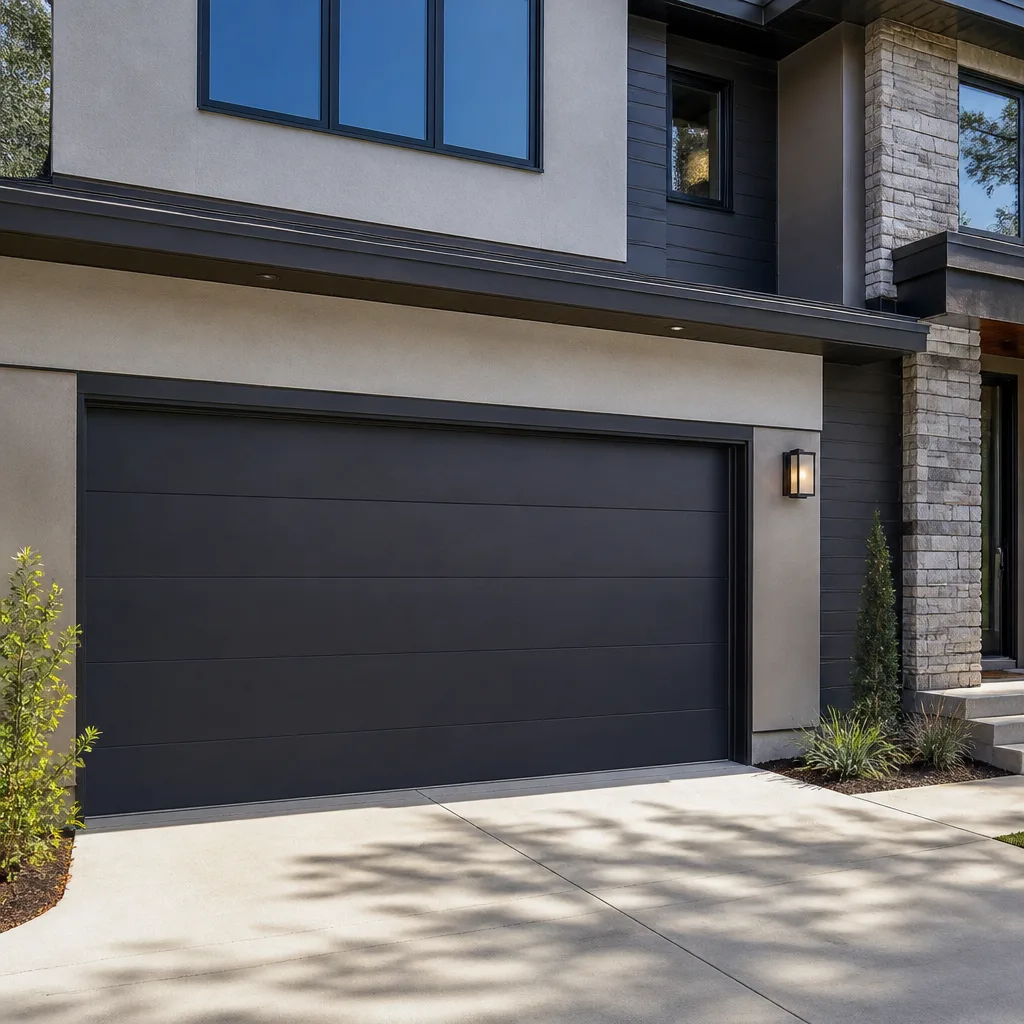 Modern flush
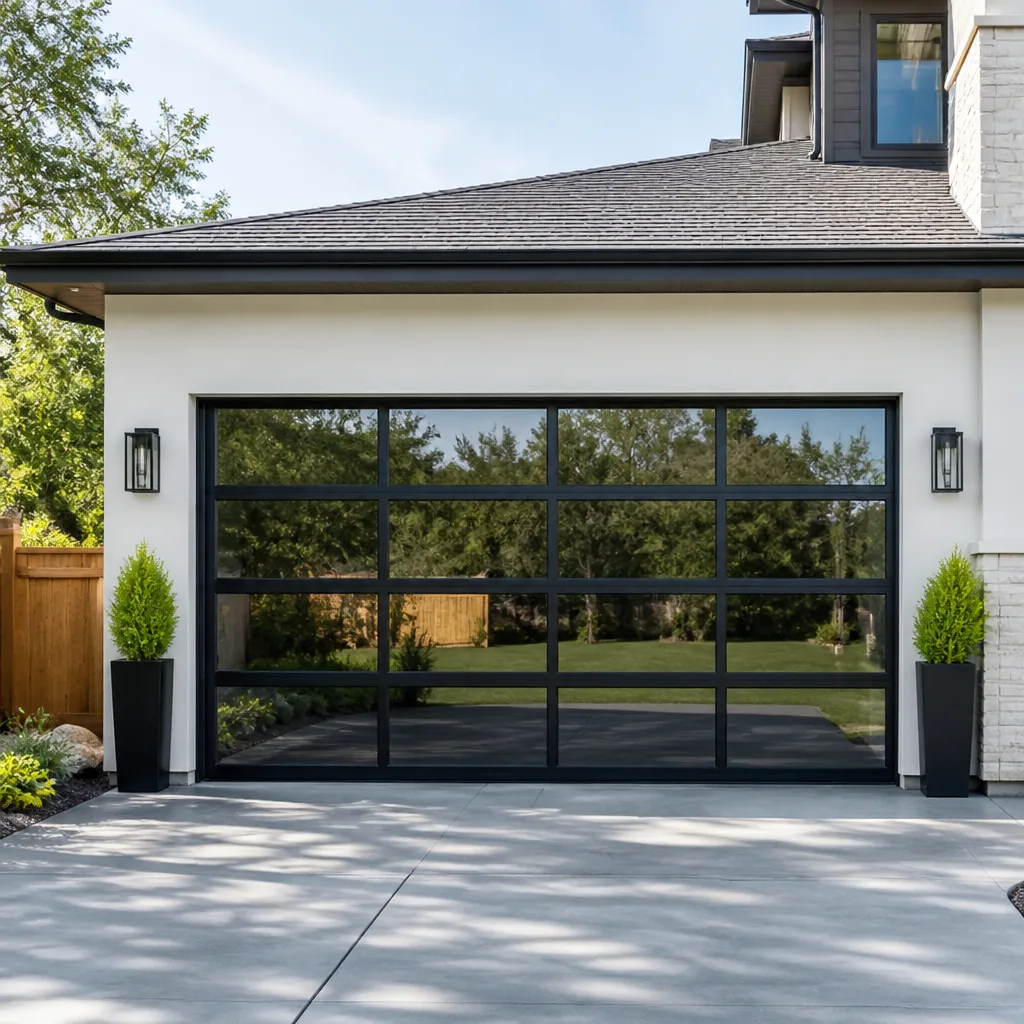 Full-view glass
 LiftMaster openers
 Chamberlain openers
Full 25-point door and opener safety check with every visit - springs, cables, rollers, tracks, and your LiftMaster or Chamberlain opener included
You get a price before we start. It does not change when the pro arrives.
Get your free estimateGarage Door Warning Signs: A West Babylon Homeowner’s Reference Guide
The noise that worries you most is usually not the one that should. A grinding door gets noticed right away; a door that has gone quiet, or a spring that has lost a little of its lift, gets ignored for months. The warning sign most West Babylon homeowners overlook costs the least to fix when it’s caught early and the most when the part finally lets go. This guide walks through the sounds, the movement, and the visual clues a garage door gives you before it fails, and it tells you which ones mean “book it this week” and which mean “stop using the door today.”
Styles & brands we work with
- Raised-panel steel
- Carriage house
- Modern flush
- Full-view glass
- LiftMaster openers
- Chamberlain openers
Quick Answer
Garage door warning signs in West Babylon fall into three groups: sounds (grinding, popping, rattling, squealing), movement (a door that slows, jerks, or travels unevenly), and visible condition (spring gaps, rust streaks, a separating end cone, a bowing panel or misaligned track). Any sign that involves the springs, cables, or a door that’s come off its track means stop using it and call a professional – those components are under extreme tension and failure can be sudden. Everything else is a book-it-this-week signal that’s far cheaper to fix before it turns into a stuck door.
Table of Contents
- What Each Sound Tells You About the Failing Part
- What You Can Safely See: Spring and Hardware Warning Signs
- When Slow, Jerky, or Uneven Movement Signals a Bigger Problem
- The Monthly Safety Tests Every Garage Door Should Pass
- Severity Framework: “This Week” vs. “Stop and Call Today”
- Warning Signs in the Opener and Control System
- How West Babylon Seasons and Weather Stress the Door
- Common Mistakes to Avoid
- When to Call a Professional
- Frequently Asked Questions
- The Bottom Line
What Each Sound Tells You About the Failing Part
Sound is the earliest and cheapest diagnostic you have. A garage door is a heavy assembly of springs, cables, rollers, hinges, and a track, and each one has its own failure noise. Learning to tell them apart is the difference between a fifteen-minute adjustment and a door that’s stuck shut on a cold morning in West Babylon.
Grinding
Grinding is usually metal on metal: worn rollers with flat spots, a dry or damaged bearing plate, or a track that’s been bent enough that the roller is dragging. It’s rarely an emergency on its own, but it accelerates quickly. Left alone, a grinding roller eats the track. If you touch nothing else on the door, watch where the sound happens along the travel – up top points to the header bearing, the sides point to the rollers or hinges, and the panel edges point to the track.
Popping
A sharp pop when the door starts or stops usually means a torsion spring that’s about to go. The spring is the part under the most stress in the whole system. A pop under load is the spring telling you its coils are binding or already cracked. Stop cycling the door and have it checked. This is the one sound you do not ignore.
Rattling
Rattling is often the cheapest repair on the whole page. Loose hinge bolts, a loose center bearing, or a rail bracket that’s backed off a fraction will rattle every time the door moves and will get worse over a heating and cooling cycle or two. Tighten what you can reach from the floor and note anything you can’t. If the rattle stays, the panel or the hardware is moving more than it should.
Squealing
A high-pitched squeal is friction. Rollers, hinges, and the torsion tube all want a small amount of lubrication at the wear points – not the track itself, which should be clean and dry. Squealing comes on gradually, which is why most homeowners in West Babylon let it run for a year. Do the low-effort part yourself and let a technician look at the bearings if it keeps up. If you’d rather let one call cover it, our Garage Door Repair West Babylon team handles the whole door in a single visit.
What You Can Safely See: Spring and Hardware Warning Signs
You don’t need to touch anything to spot most spring failures. With the door closed and the opener disengaged from the wall and the door fully down, stand on the floor and look. Four things matter.
- A gap in the spring coil. A torsion spring that’s failed has a visible separation, usually toward one end. The door may still open on the remaining spring, but it’s running on borrowed time and the other spring is carrying double the load.
- Rust streaking along the spring or the torsion tube. Rust on a torsion spring is a sign the steel has been working hard and holding moisture. A little surface rust on a hinge is cosmetic; rust along the spring body, with visible pitting, is not.
- End-cone separation. The cone at the end of the torsion spring should sit flush against the coils. If you can see daylight between the end cone and the last coil, the spring has started to unwind from its seating.
- A sagging or bowing door panel. Look along the top edge of the closed door with the light behind it. A single panel that dips or bows is either losing structural strength or the door is pushing against a track or cable problem.
Springs and cables are under extreme tension at all times. Do not touch a spring, do not try to turn the winding cones, and do not try to loosen a cable to “relieve the pressure” – these parts can release without warning and cause serious injury. Observe from the floor only. When it comes to an actual spring problem, the right call is to have the door examined and repaired by a trained technician. Our garage door spring repair specialists treat spring failure as the highest-priority call on the whole door.
When Slow, Jerky, or Uneven Movement Signals a Bigger Problem
Movement tells you which side of the door has the problem. Watch one full cycle from the floor, door closed to open to closed again. The pattern is diagnostic.
- Door slows noticeably in one direction. One spring is doing more work than the other, or a torsion spring has lost lift. Usually the “schedule this” tier, but worth a call soon.
- Door jerks or stops partway. Either a bound roller, a track that’s been hit, or an opener with a force setting that’s masking a mechanical problem. Stop cycling it and have it checked.
- Door travels unevenly – one side higher than the other. A cable is slack or stretched on one side. The cable is the part that keeps the door square. If it’s slipping, the door can come off the track. Stop using the door.
- Door rises partway and reverses back down without a visible obstruction. Either the safety sensors are misreading or the opener’s force limit is set too low. Not urgent if the sensors are the cause; worth a call if it repeats.
- Door falls, then catches, or drops suddenly near the floor with a thud. Spring compensation is off. This is the tier to stop and call today.
One more movement check that’s easy to miss: with the door fully closed, push up on the bottom panel by hand. A properly balanced door on working springs should be heavy but manageable, and should not feel like it’s fighting you. If opening by hand takes real effort, the springs are tired. We work on doors from every major manufacturer – Craftsman, LiftMaster, Raynor, Chamberlain among them – so we’re used to reading movement on whatever hardware is already on your ceiling.
The Monthly Safety Tests Every Garage Door Should Pass
Two tests take under a minute and cover the two safety systems most likely to fail silently. Run both once a month.
The Auto-Reverse Test
- Put a piece of 2×4 lumber flat on the floor in the middle of the door opening.
- Close the door using the wall button or the remote.
- The door should reverse when it contacts the wood. If it presses down and stops, the reversal is failing and the door needs service.
The Photo-Eye Test
- With the door open, find the two small sensors mounted on the track near the floor, one on each side.
- Check that both have a lit indicator light – most brands show a steady light when aligned. Craftsman and LiftMaster units use the same basic signal.
- Pass a hand or a broom handle through the beam while the door is closing. The door should reverse immediately.
- If one light is dark or blinking, the beam is misaligned or one sensor has failed. That’s a same-week call at minimum.
Partial failure matters more than complete failure here. A sensor that’s slightly out of alignment will sometimes miss a person on one side of the door and sometimes catch them. If the door reverses on one side of the opening and not the other, treat it as a failure. When the door won’t move, we move fast – a stuck door is a security concern for the house, and our garage door repair team answers emergencies as a core part of what we do. Call (855) 550-7512. We answer 24/7. Fast dispatch from 7am to 7pm, Sunday through Friday.
Severity Framework: “This Week” vs. “Stop and Call Today”
The framework below is what we fall back on when a homeowner calls and wants to know whether their situation can wait until Thursday. It’s not a substitute for a technician’s eyes on the door, but it’s the same sorting we do on the phone.
Book this week – the door still works
- Grinding, squealing, or rattling that’s new in the last few weeks
- A door that’s running slowly in one direction
- One sensor light that’s dim, flickering, or needs adjusting
- A single hinge or bracket that’s backed out of the wood
- Rust on hardware other than the springs
Stop and call today – the door should not be cycled
- A visible gap in the spring coil, or end-cone separation
- A loud pop under load, followed by a door that won’t raise
- A cable that’s visibly slack, frayed, or off its drum
- A door that’s off its track, tilted, or hanging unevenly
- A door that dropped suddenly or fell before it caught
- A door that reversed partway and won’t raise on a retry
The pattern is simple: anything spring, cable, or track related goes into the top tier. The door can’t safely be cycled when one of those parts is compromised, and running it anyway is what turns a spring replacement into a spring and cable and track job. If you’re unsure which side of the line you’re on, call us and we’ll help you sort it. Call (855) 550-7512. We answer 24/7.
Warning Signs in the Opener and Control System
The opener is the electronic brain of the system, and it fails differently than the mechanical parts. Most of what goes wrong shows up in the first few cycles after it starts misbehaving.
- Door only opens partway, then stops. The opener’s force setting is either set too low or the door has become harder to lift mechanically. Both need a look.
- Remote works inconsistently or only at close range. Battery, antenna wire, or interference. Check the battery first; if that’s fresh, the opener or the wall unit needs a diagnostic.
- Door opens on its own. Interference on the same frequency, a stuck wall button, or a board-level fault in the opener. Unplug the opener from the ceiling outlet as a temporary step and call us.
- The light stays on, or the opener beeps several times and refuses to move. Most modern openers use the light and beeps as diagnostics. If the opener is a LiftMaster or Chamberlain and its manual is missing, mention that when you call so we know to bring the right reference.
- The opener runs but the door doesn’t move. The door has been disengaged from the carriage (sometimes called the emergency release), or the drive gear inside the opener has stripped.
Our garage door opener repair work covers the major residential opener brands – LiftMaster and Chamberlain most often, and Craftsman in plenty of older West Babylon homes – so we’re not sending you looking for a brand-specific vendor. When the door won’t move, we move fast. One call covers repair, opener, springs, or a full new door.
How West Babylon Seasons and Weather Stress the Door
Long Island weather is not extreme by national standards, but it does the same thing to a garage door every year: large temperature swings across a season, salt humidity, and repeated freeze-thaw on the ground around the door. The result is that most West Babylon doors run their hardest on the first cold snap of the year and again in the middle of the summer.
Cold air stiffens every lubricated part of the door – hinges, rollers, the torsion spring itself – which is why a spring that has been quietly failing all autumn tends to break the first week the temperature drops. Heat is the other side: the wood shrinks and swells with the humidity, and the lighter-weight panels and hardware start to show gaps and rattles by July. A door that has just started to hang wrong in June is often the same door that will fail in January, and catching it in June costs less.
Rain and groundwater are the other factor. West Babylon has enough low-lying ground near the shoreline that water pooling at the base of the door isn’t unusual in a wet spring. Moisture that sits against the bottom seal and the lower hardware is what drives rust into the end of the spring and the bottom bracket. If you can see standing water under the door after a storm, note it and mention it when you call; it’s a maintenance issue on its own.
Common Mistakes to Avoid
- Greasing the track. The track should be clean and dry. Lubricant on the track causes the rollers to slide instead of roll, and it collects grit that grinds the rollers down faster. Grease goes on the hinges, the rollers’ bearings, and the torsion tube, never the rail.
- Treating a popped spring as a “maybe.” Running a door with a broken spring overloads the other spring, the cables, and the opener. The typical West Babylon household cycles the door several times a day, and that half-failed system will not hold up for long.
- Adjusting the opener’s force setting to compensate for a stiff door. Turning up the force masks a mechanical problem that will keep getting worse, and it removes the safety margin built into the opener.
- Cutting the safety sensor wires to silence a beep. The photo-eye system is the part that keeps a person or a pet from being trapped under a closing door. If it’s beeping, it needs fixing, not disabling.
- Ignoring a small rattle in November. Cold-weather rattles almost always mean a joint or bearing has worked loose, and the same joint that rattles in November is the one that snaps in January.
- Using a handyman for a spring or cable job. Spring replacement requires the right winding bars, the right spring sizing for the door’s weight, and the training to do it safely. This is the one garage door job that’s simply not a generalist repair.
- Waiting for a door to “come back to normal.” A door that misbehaved once and then seemed fine will misbehave again. Garage doors don’t self-correct; they cycle between problems until a hard part fails.
When to Call a Professional
Call us the moment you see a visible spring gap, a slack or frayed cable, a door off its track, or a door that dropped before it stopped. Those are the cases where cycling the door again can turn a repair into a much larger job. For grinding, running slow, a rattle, a sensor light that’s flaky, or an opener that misbehaves on its own, schedule service this week and keep using the door sparingly until we’ve looked at it.
Garage Door Repair West Babylon offers free estimates in West Babylon – call (855) 550-7512. Our technicians have up to 13 years of experience on the major brands, we treat spring work as a specialist job rather than a generalist repair, and we quote the price and agree it with you before any work starts. The written estimate is what sets the price, not a phone number. Call (855) 550-7512. We answer 24/7. Fast dispatch from 7am to 7pm, Sunday through Friday.
Frequently Asked Questions
The most common warning sign is a door that’s developed a grinding or squealing noise during its travel. Most often it’s worn rollers or a bearing that needs lubrication, and catching it in the first few weeks usually means a quick fix rather than a track or panel repair. If you can hear it from inside the house, it’s time to have it looked at. Call (855) 550-7512 for an exact quote – estimates are free.
One spring replacement in the West Babylon area typically runs in the $180-$340 range, and a matched pair is usually replaced together, so a pair is about twice that. Cables, rollers, or a door that’s come off track would come on top of that, which is why we come out and diagnose first. The written estimate we leave you sets the final price and is agreed before any work starts. Call (855) 550-7512 for an exact quote – estimates are free.
Yes, stuck doors are exactly the kind of call we treat as urgent and we aim for same-day service whenever the schedule allows. A door that won’t close is a security issue and a door that’s off its track or has a snapped spring is a safety issue, so both jump the queue. Call (855) 550-7512. We answer 24/7. Fast dispatch from 7am to 7pm, Sunday through Friday.
No, the price we write down is the price – that’s the point of a written estimate before work starts. We diagnose, we quote, and we agree it with you. If we find something on the door that changes what needs to be done, we come back to you with a new quote before touching anything. Call (855) 550-7512 for an exact quote – estimates are free.
The local professionals we connect you with are licensed and insured as their state requires, and they carry the tools and parts to handle spring, cable, and opener work on-site. We’d rather say that plainly than throw around credentials we can’t substantiate. Call (855) 550-7512 for an exact quote – estimates are free.
Once a month is enough for most West Babylon homes, and it’s worth doing after any kind of weather event that’s had the door struggling. Both tests take under a minute and they catch the two failures most likely to matter for safety. If either test fails, stop using the door until it’s inspected. Call (855) 550-7512 for an exact quote – estimates are free.
The Bottom Line
The door that breaks without warning was almost always warning you for a while. Grinding and rattling are usually this-week repairs; spring gaps, slack cables, off-track doors, and popping under load are stop-and-call-today signals. Run the auto-reverse and photo-eye tests monthly, do the low-effort lubricating and tightening yourself, and let a specialist handle springs and cables. West Babylon weather will stress the door twice a year whether you’re ready or not, and the cheapest repair is always the one that starts as a noise instead of a snap. We’re here in West Babylon when the sound gets past the point where you want to wait.
Written by the team at Garage Door Repair West Babylon.
See the difference
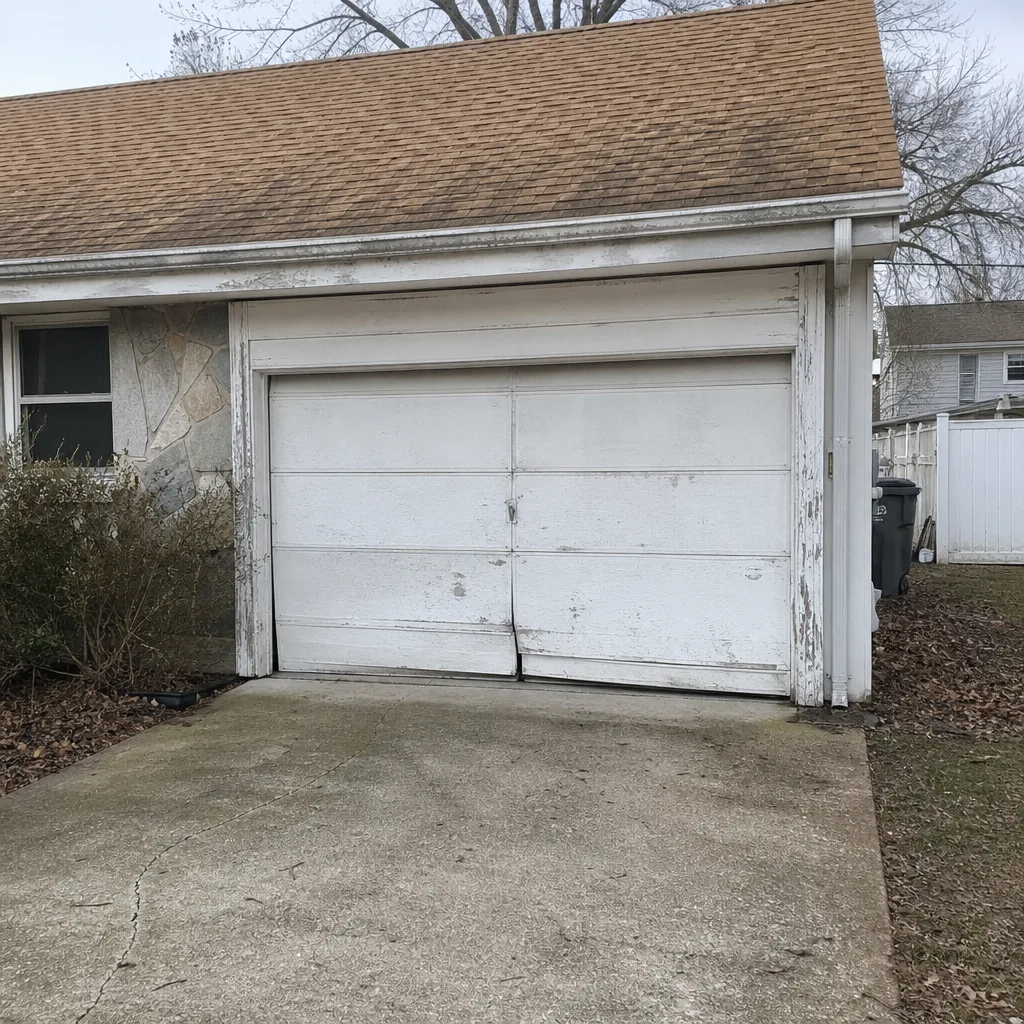 Before
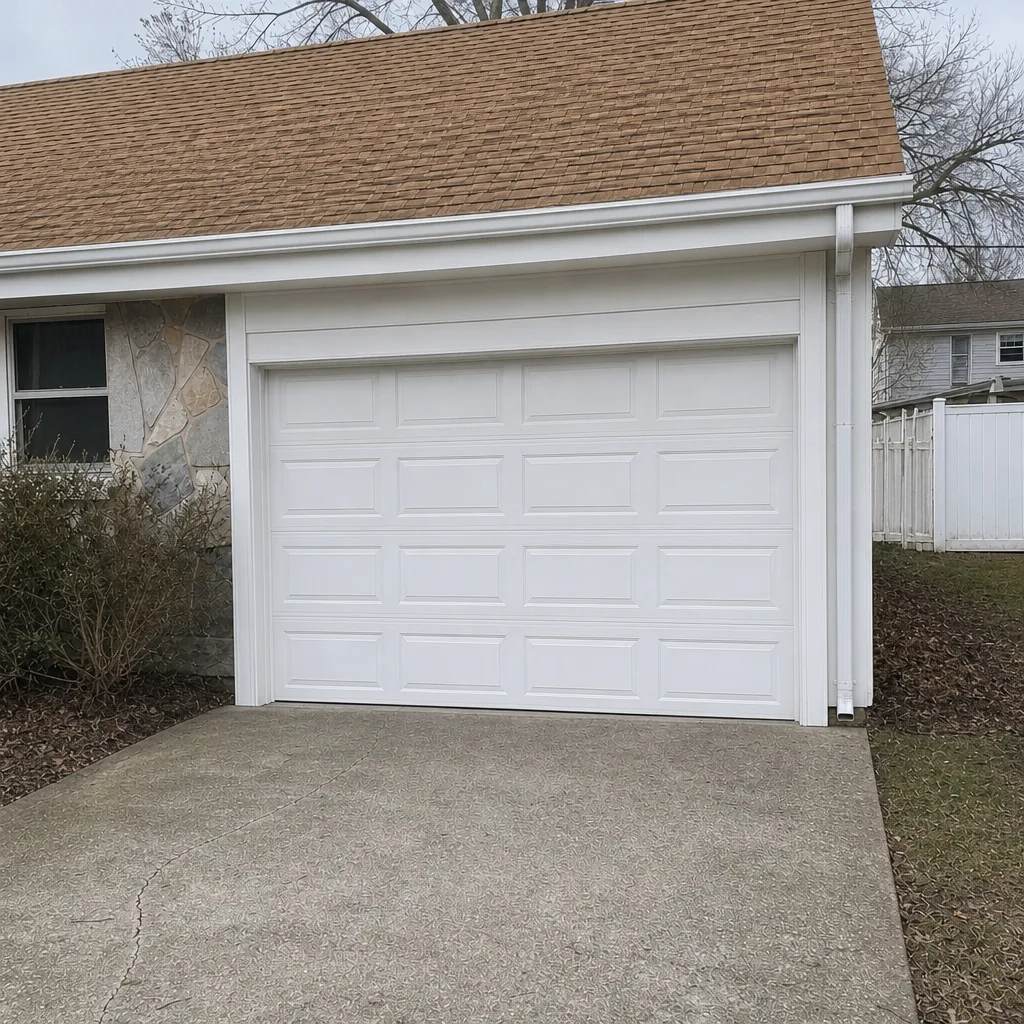 After
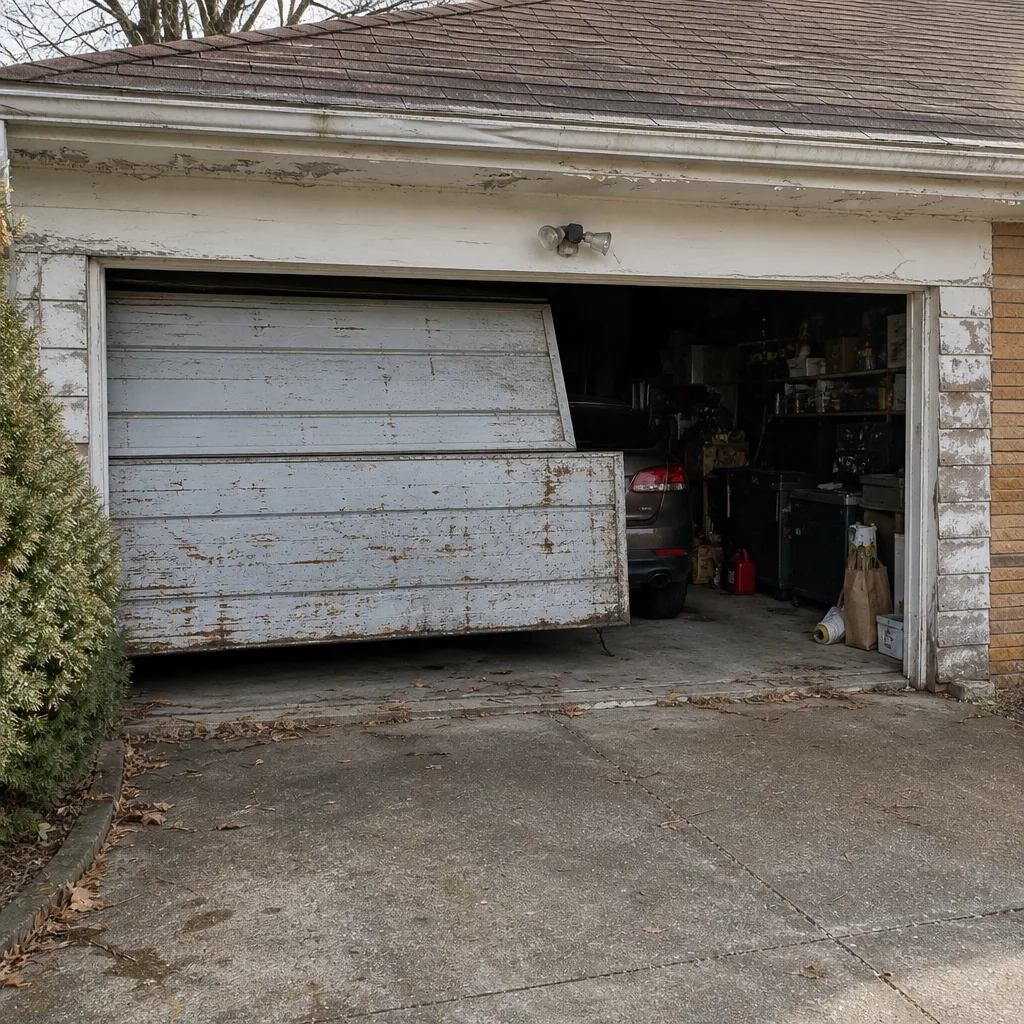 Before
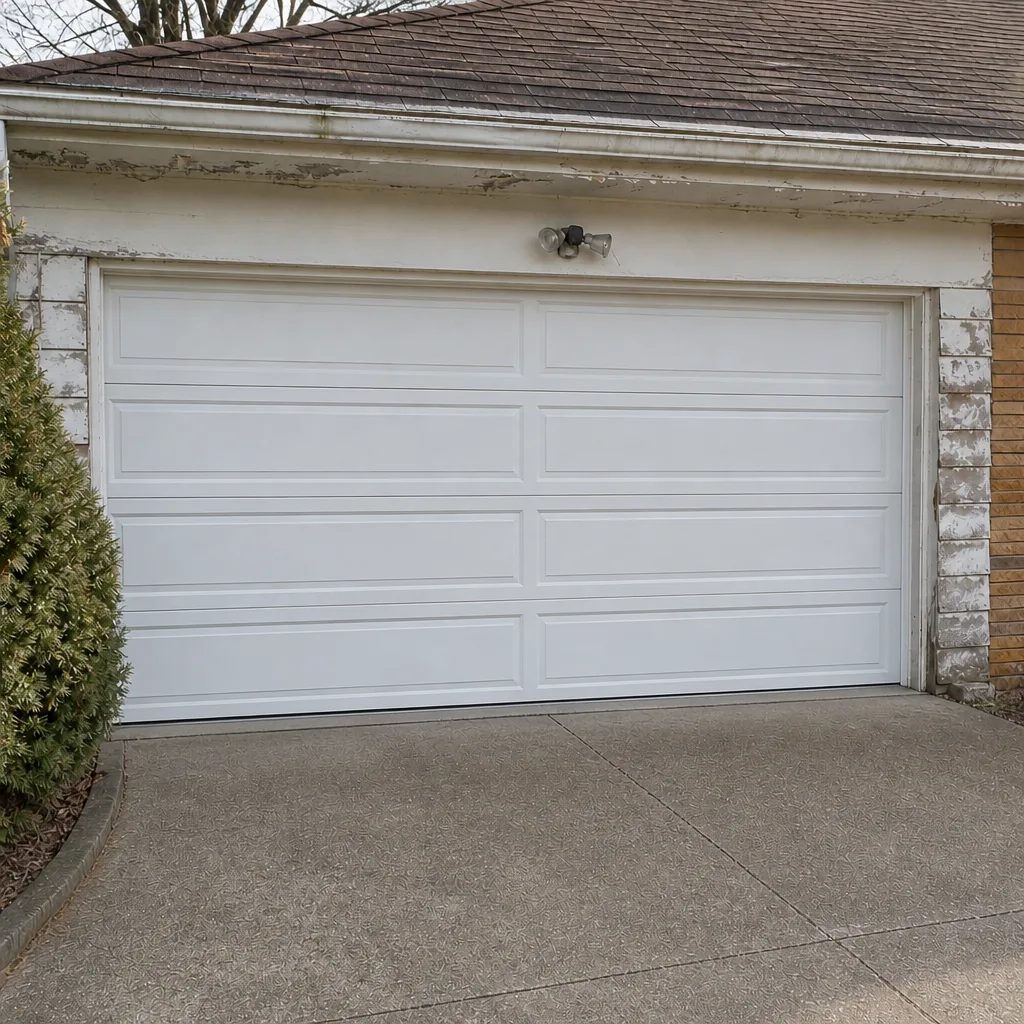 After
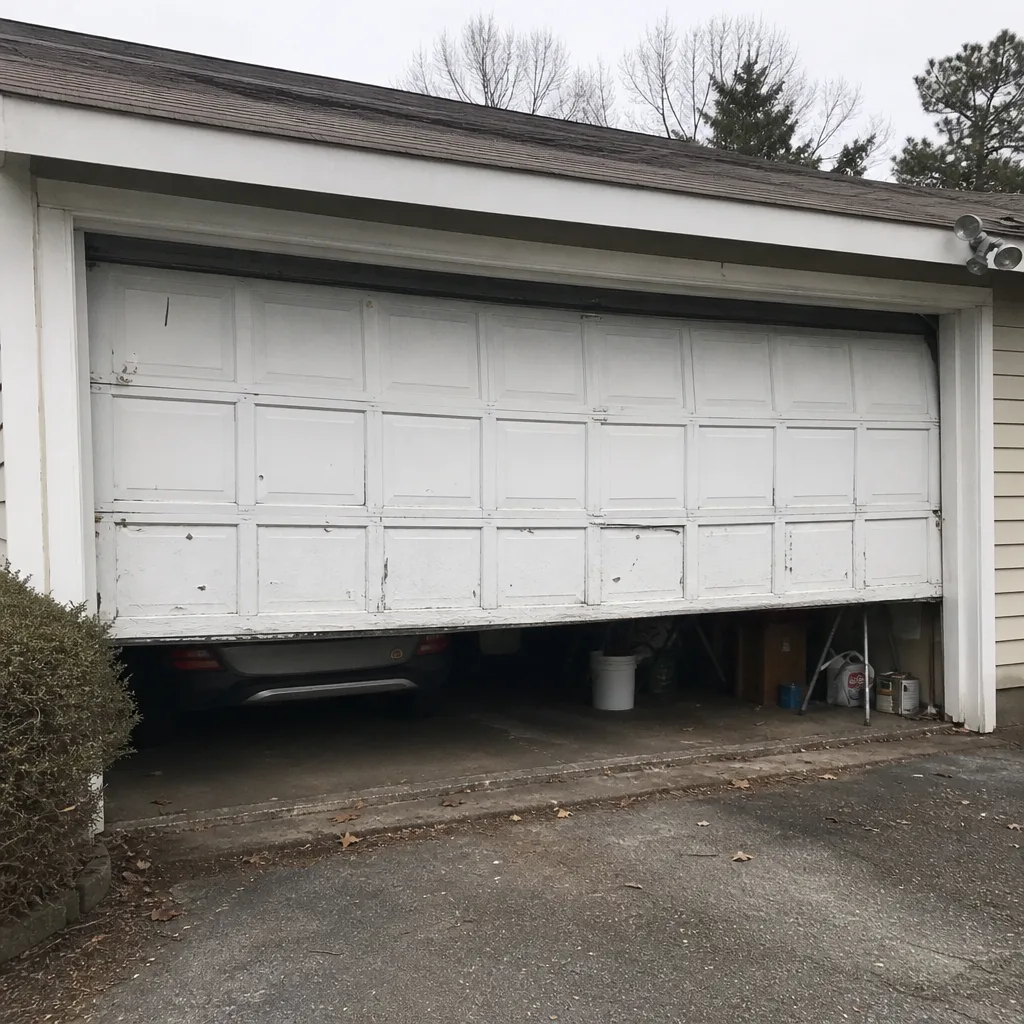 Before
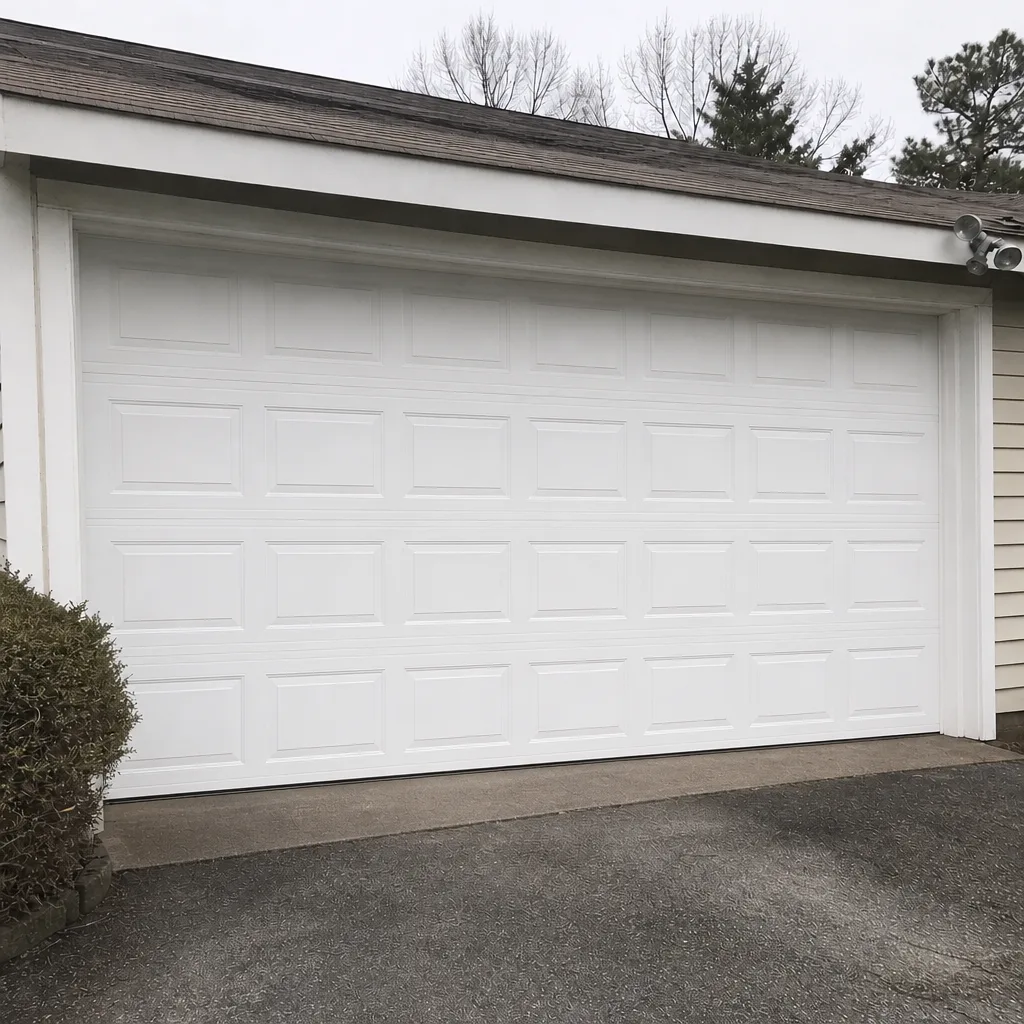 After